
When I arrived in the United States in 2009 as an international researcher, I brought with me not just a suitcase, but a deep curiosity about how people from different cultures collaborate, learn, and grow together. Over the years, I’ve had the privilege of working across research and teaching environments that span disciplines, institutions, and continents. Since 2013, I’ve served as a Project Scientist at the Center for Polymers & Organic Solids, where I’ve led and managed research efforts at the intersection of materials science and chemistry. But beyond experiments and papers, my most fulfilling work has been in mentoring and guiding students—especially those from underrepresented backgrounds—toward becoming confident contributors to the scientific community.
Diversity in research and education isn’t a policy checkbox. It’s a lived experience. It’s embedded in how we form research teams, how we teach in the classroom, how we listen, and how we support each other’s growth. I’ve made it a priority to design projects that intentionally pair international students with native English speakers—not only to promote collaboration but to create space for everyone to sharpen their communication and presentation skills in a research context. I’ve seen firsthand how access to instruments, real lab experience, and meaningful advisory can help students from minority and disadvantaged backgrounds unlock their potential. Science becomes more dynamic when many voices shape the questions—and the answers.
My commitment to diversity is not confined to the lab. Looking forward, I plan to build programs that integrate research, teaching, outreach, and professional development. By leveraging UC programs like Competitive Edge and UC LEADS, I will develop workshops to introduce energy materials research to students from low-income and first-generation college backgrounds. My lab will remain open—not just in terms of access, but in spirit—where curiosity thrives and differences in perspective are valued. These efforts will include evaluation mechanisms that help students identify their strengths and prepare for more advanced training.
I also believe that international partnerships can play a powerful role in building a more inclusive academic future. I plan to develop short-term exchange programs and collaborative research experiences between our campus and partner institutions around the world. These initiatives won’t just broaden the scope of scientific inquiry—they’ll deepen the human connection that underlies great collaboration.
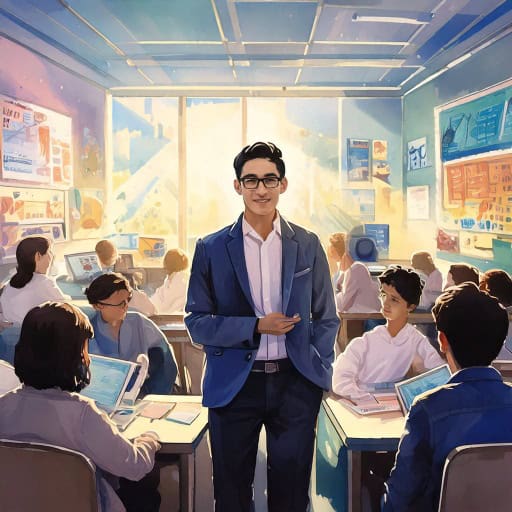
In the classroom, I’m committed to adaptive teaching. I adjust my lesson plans based on the educational backgrounds and needs of my students, with particular attention to those who have historically lacked support—be it due to language barriers, financial constraints, or systemic bias. I believe teaching must be responsive. The goal is to help all students progress not just in knowledge, but in confidence and self-efficacy.
And while university-level efforts matter, we also need to reach earlier. I’m passionate about creating learning bridges for younger students, particularly those who are socioeconomically disadvantaged or English language learners. By introducing them to the fundamentals of science and engineering early on, we can open doors that too often remain closed. Higher education shouldn’t be a gate—it should be a gateway.
Looking ahead, I’m eager to lead a professional development initiative that targets senior graduate students from all walks of life, preparing them for careers in academia, industry, and beyond. These future scientists, engineers, and educators will become the backbone of a more diverse, inclusive, and globally connected research ecosystem.
I carry this mission not as a task, but as a calling. My research, my teaching, and my mentorship all reflect a deep belief that talent exists everywhere—and it is our job to create the conditions where it can thrive. Diversity is not just good for science. It is science, in its most human form: a collective pursuit of understanding, powered by many minds, many voices, and many stories.