Category: Materials Thru Life

Talks about science, engineering, research, ventures, consulting, and entrepreneurship.

  • Push and Pull and Flow: The Story of Mechanical and Rheological Analyses

    Push and Pull and Flow: The Story of Mechanical and Rheological Analyses

    What do chocolate bar, toothpaste, rocket seal, ketchup, and touchscreens have in common?

    They all respond when we push, pull, twist, press, or wait on them. Such properties must be fine-tuned for real-world situations. Failure often costs money, user experience, or lives.

    In this newsletter version, I tell the story of how materials resist or give in under force. This is the topic of mechanical and rheological analyses. They are in every aspect of our daily lives. We answer questions like: How strong? How compliant? How squishy? How long will it last before it cracks, flows, or collapses?

    The Classics: Tension, Compression, and Bending

    Let’s start with the basics of mechanical testing.

    When you pull on a material and observe how it responds. This is tensile testing. A stress-strain curve can be plotted by recording the force applied and the deformation it induced. Engineers use this to learn a material’s elasticity, tensile strength, and elongation at break.

    Compression testing, in contrast, measures a material when you squeeze it. This is useful for foams, ceramics, and construction materials. Imagine an earthquake-resistant concrete mix that looked perfect on paper but failed prematurely in a field test. Compression testing under real loading conditions could reveal microvoid formation not visible in the initial lab-grade samples.

    Now let’s say a new carbon-fiber composite we invented passed all tension tests. But when demoed in a curved fuselage panel, it cracked under pressure. This is when flexural strength—how well a material handles bending—is essential. The material can be strong in plane. But flexural testing could reveal delamination under out-of-plane stress.

    The Surfaces: What Indentation Reveals

    Mechanical properties tell stories of materials bulk behaviors. But what if the material surfaces are of great importance in practical settings?

    Nanoindentation is a technique where a microscopic probe presses into the surface of a material to measure hardness and elasticity on the nanoscale. It offers magnifying views into coatings, films, and delicate microstructures. It turns “how hard is this?” into “how does this change across the tiniest regions?”

    Engineers working on flexible electronics use nanoindentation to confirm that the ultra-thin electrodes stayed ductile even after repeated folding. It can also be used to map the local stiffness across dentin and enamel in teeth for better design of dental composites.

    The Wait Game: Watch Materials Evolve

    Instead of pulling or pressing, Dynamic mechanical analysis applies small oscillating forces and tracks how the material reacts at different temperatures or frequencies. It creates well controlled conditions to watch how materials evolve over time. This is the technique behind designing running shoes that feel bouncy in cold Alps and not mushy in the Badwater Ultramarathon. It is also the basis of distinguishing an 80 mph rated tire versus a 120 mph rated one.

    How material evolves over time is pivotal especially when long-term application and life are involved. Creep measures the change in dimensions when a prolonged force is applied. Stress relaxation, on the contrary, records the forces required to keep a certain change in shape for a given period.

    It is possible that a catheter tubing performed well in stress-strain test but deformed after prolonged use inside the body. Creep testing under body conditions reveals slow deformation that wasn’t apparent in short-term tests.

    Stress relaxation, meanwhile, helps engineers understand how a material complies of stress over time. Think of the rubber bands used in orthodontics. Proper relaxation testing ensures their corrective force over days or weeks.

    The Flow: Rheology at Work

    Rheology studies how materials flow under force and how that flow changes over time. It plots viscosity and determines how materials respond under different forces and time intervals. It’s used for designing everything from toothpaste that doesn’t dribble to cement slurry that must remain stable during pumping.

    Recall when You fight with a ketchup bottle. Nothing happens at first. Then suddenly the fries are swimming. This is yield stress—the minimum stress needed to start the flow. If you don’t exceed it, the material behaves like a solid. Go past it, the material flows. Manufacturers tweak yield stress in salad dressings, paints, and face creams to make them behave on demand.

    Some materials show thixotropy—a time-dependent behavior where viscosity decreases over time as you apply stress and recovers itself once left alone. This is not just important for user experience. Think of how paint stirs more easily after a few seconds. And even easier when applied on the wall. Once leveled, it regains its original high viscosity before solidifying for a fine finish. Everyone takes it for granted. Behind the scenes, it is formulation at its best.

    The Outlook

    Mechanical and rheological testing listen to what materials try to say—how they handle forces, for better or worse, under all kinds of conditions. We see these tests as windows into a material’s life story. Every elastic modulus, creep curve, and flow ramp have a real-world tale behind it. At TEMPR Learning, we will learn how to tell their stories that connect fascinating materials characterization techniques to real world impacts.

    In the coming weeks, I will take you deeper into each technique—temperature effect, creep, nanoindentation, yield stress, thixotropy, and more—with storytelling that bridges science and consequence.

    Materials analyses are not boring textbooks. If you can tell the story.

  • The Stories of Thermal Analyses of Materials

    The Stories of Thermal Analyses of Materials

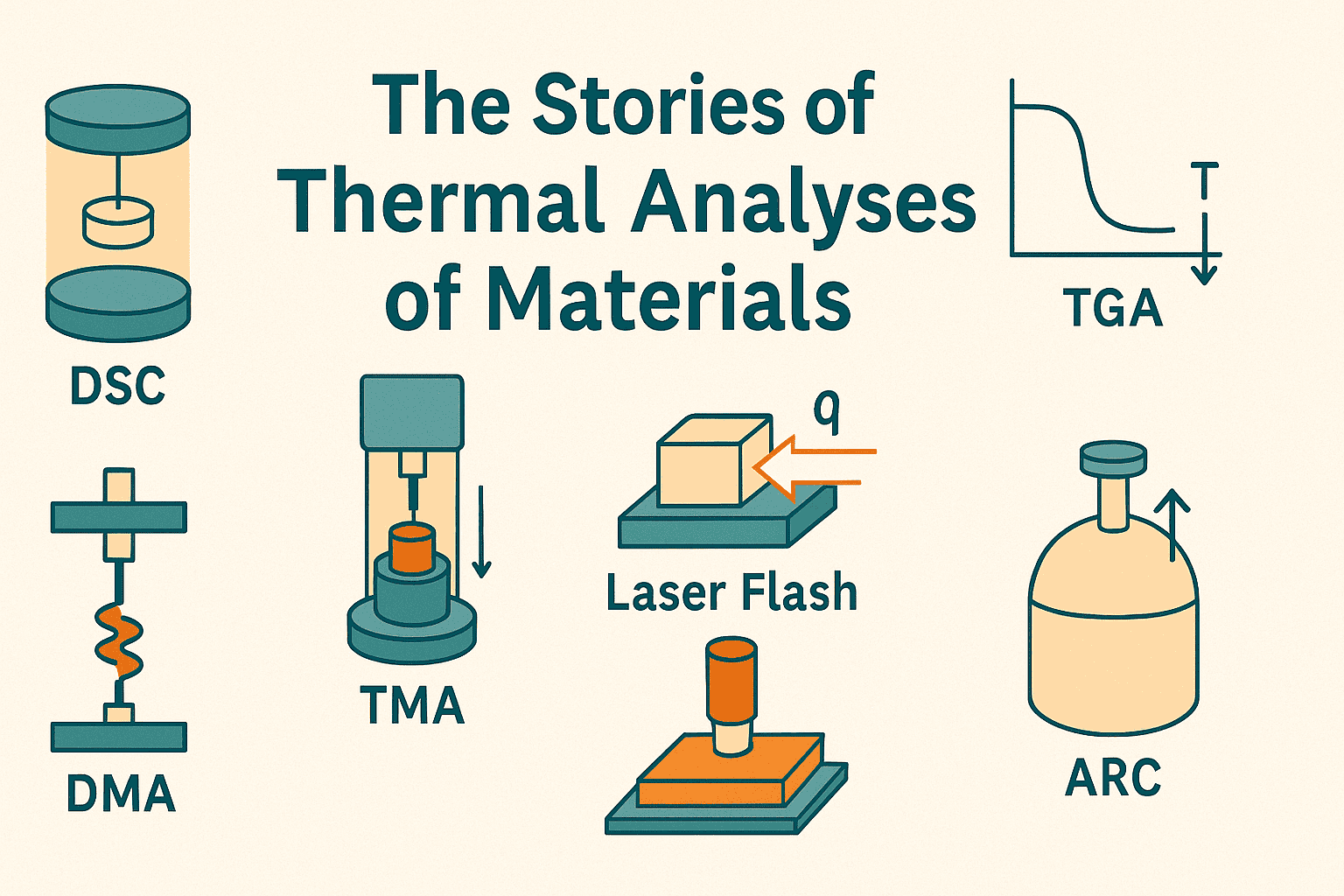
    Every material has a relationship with heat. Yet, thermal behavior can rarely be something you can guess from a chemical formula, maybe possible for a top-notch theorist. But what is the point of guessing if we can heat the material up before our eyes? It turns out that hands-on is just the beginning.

    Under heat, some materials fall apart at the first sign of rising temperature, others hold steady until something deep inside gives out. It needs to be measured and understood in the context of a story. A story of why a product failed, why a process stalls, or why a brilliant formulation falls short when scaled.

    In this newsletter edition, I will decode the jargon in thermal analysis techniques. Future editions will delve deeper into the essence of each one.

    Let’s begin.

    From Theory to Reality

    In school, we learn thermal theory like it’s gospel. Question and answer are one-on-one. We talk about glass transition as a model zig-zag, melting point as a perfect peak, and decomposition as a single step. The curves are clean. The answers, exact. But in practice? Materials don’t behave like test questions. The data is messy. The peaks are broad and irregular. Sometimes what looks like noise is the actual clue you’ve been missing.

    The first roadblock we face when entering the world of thermal analysis is the jargon. Like many disciplines, jargon seems more formal and professional. But deep down, it is merely a symbol for a technique or a tool that helps us to add context to our story.

    I will start in this introductory newsletter by introducing six of the most common thermal analysis techniques. I am also using an imaginary story for each technique to help you get acquainted.

    DSC: Differential Scanning Calorimetry

    Let’s begin by heating a material and monitoring the energy input and output against temperature. Any physical or chemical change—like glass transition, melting, crystallization, and oxidation—in the material will bring about certain changes in the detected signal. This is DSC.

    A packaging company noticed that their food wrap film turns brittle during shipment in summer. The supplier claimed the polymer’s glass transition was 75 °C, well above shipping temperatures. DSC reveals an energy output peak well below 75 °C. It turns out that some batch of polymer was not fully cured. A simple DSC test avoided further loss and led to updated processing specs.

    TGA: Thermogravimetric Analysis

    From the name, we know it has something to do with heat and gravity. It is right. TGA measures weight changes of a material when we heat it up. Plain and simple. When things burn, decompose, or evaporate, TGA captures all of it. Sounds theoretical enough until the story follows.

    A product line of flame-retardant panels shows inconsistent performance in fire testing. TGA tells that weight loss profiles vary between units, some with weight loss at lower temperature. Tracing back to the raw material source, the vendor admits that a cheaper additive was used instead, which is the cause of early degradation. TGA analysis in this case forges hard requirements in raw material procurement.

    DMA: Dynamic Mechanical Analysis

    Dynamic means changing temperature. Mechanical, well, means mechanical. DMA takes a leap and measures how a material wiggles under a controlled force when heated. This behavior it monitors can tell how much and how well a material can store mechanical energy, or instead, dissipate it. Let me elaborate.

    Clients complain about excessive noise from the interior panels of an EV. Separate mechanical and thermal tests are all compliant. However, when you run a DMA test—which combines thermal and mechanical—it reveals that the polymer lacks sufficient damping at cabin temperatures which turns vibration into noise.

    TMA: Thermomechanical Analysis

    Want to know how and if a material expands or shrinks when heated? This is TMA. Even minute changes in dimensions are well captured, critical for delicate material parts that require durability and stability.

    Let’s run a failure analysis—why something fails—on a delamination issue of a flexible circuit board with TMA layer by layer. The results confirm a mismatch of thermal expansion between the adhesive layer and the substrate. No doubt when temperature increases, the building internal stress is enough to cause layer separation.

    LFA: Laser Flash Analysis

    The name tells nothing about what it does. Let me rephrase. LFA measures how efficient heat moves through a material. We normally refer to as thermal conductivity and thermal diffusivity. LFA is just the most popular way of measuring it.

    All EV batteries need thermal release during operation. We know that. Someone proposes to use a new lightweight composite for the enclosure. Using Laser Flash Analysis, we find that the new material has low thermal diffusivity, too low for rapid heat dissipation from the battery. A follow up formulation idea by adding 10% graphite filler doubled thermal conductivity and the new lightweight battery is in production.

    ARC: Accelerating Rate Calorimetry

    ARC monitors material self-heating at any temperature. An instrument is made so delicate that it gently heats up a material and then wait under the most extreme heat-isolated condition (an adiabatic process) to see if the temperature even increase one hundredth of a degree over time. This sounds like a tedious process. But in the field of ever more popular lithium ion battery, it often means life or death. Here is an example.

    A lithium ion battery supplier wanted to market their new electrolyte with a higher decomposition temperature. A just-in-case ARC test shows a self-heating onset at a temperature even lower than its predecessor. This might be bad news for the R&D team. But it surely saved lives by not having it hit the market.

    They work Hand in Hand

    Each technique tells a different aspect of the story. Much like a movie scene viewed from different angles and lenses. DSC reveals transitions. TGA shows stability. DMA tells you how a material feels under load. TMA monitors thermal distortion. LFA explains heat flow. ARC predicts danger. But used collectively, they do much more than test. They anticipate performance, explain failures, and guide the path to innovation.

    Some of these techniquesDMA and TMA in particular—overlap with mechanical and rheological analysis. Another topic we will be focusing on in the next newsletter edition. When we zoom out and take a God view of all the techniques, it is evident that all of them are interconnected. Our job is to use them to tell a compelling story.

    Looking Ahead with TEMPR Learning

    Instead of advocating for what the school should do, we will take the lead and just put down what we think is important. I am leveraging the TEMPR Learning platform to teach not just the theory for the sake of it, but the story of reasoning, purpose, and results. If you are in R&D, failure analysis, process engineering, or quality control, my mission is to give you both the technical and storytelling tools to succeed. For the new grads and soon-to-be, I am creating a helping bridge to replace your career dilemma.

    Thermal techniques are rarely taught as a whole in school. But they should be, and maybe even blending in the connections beyond the thermal scope. These techniques are seldom used alone in the field. They often work together to guide materials selection, qualify suppliers, solve customer complaints, and keep products safe.

  • A Brief Intro of Each Instrument I manage

    DSC2500:         This thermal instrument measures materials phase transitions (e.g., ice melting) under controlled heating between -90 C and 400 C.

    TG Libra:           This is one of the two TG instruments, part of the thermal instrument family. It measures how materials weight changes upon controlled heating from room temperature until 1100 C.

    Q500 TGA:       Same function as TG Libra but is built by TA Instruments.

    STA:                   This is the most capable thermal instrument in TEMPR Lab. It can measure phase transitions and weight changes at the same time while in-line mass spectrometry and FT-IR enable real-time analysis of gases generated during materials decomposition.

    FlashSmart:      Elemental analysis of C, H, N, S, and O in organic compounds, commonly in quality control in pharmaceuticals.

    ICP-MS:             Elemental analysis of almost all metal elements capable of measuring concentrations down to ppt. Essential tool for drinking water quality control and forensic toxicology.

    easyXAFS:         Using X-ray to identify chemical environments of transition metal elements. Different elements under various chemical conditions absorb X-rays across different energies.

    EDX07000:       Using X-ray induced fluorescence to identify and quantify metal elements within almost any materials in any form, from liquid water to a wedding ring.

    Q800 DMA:      This unit measures delicate solid mechanical behaviors with deformation as small as a few micros unseeable with naked eyes.

    Instron:             This mechanical measurement unit is capable of stretching or compress materials with up to 50,000 N of force. Current configurations are set for plastic materials with maximal force of 500 N.

    3Flex:                This unit can measure surface areas and pore sizes of porous solid materials with pore sizes as small as a few angstroms.

    AccuPyc:           This unit measures volumes of solid materials following the classic pressure-temperature-volume equation.

    APC:                  This unit can measure particle sizes or polymer molecular weights including plastics, drug candidates, proteins, and other biomaterials.

    Rheometer:     This instrument measures all kinds of flow behaviors of liquid materials. It is the essential tool for monitoring the quality of cosmetics, food items, paint, and almost any other liquid products you can think of.

  • Introduction to TEMPR Lab

    Introduction to TEMPR Lab

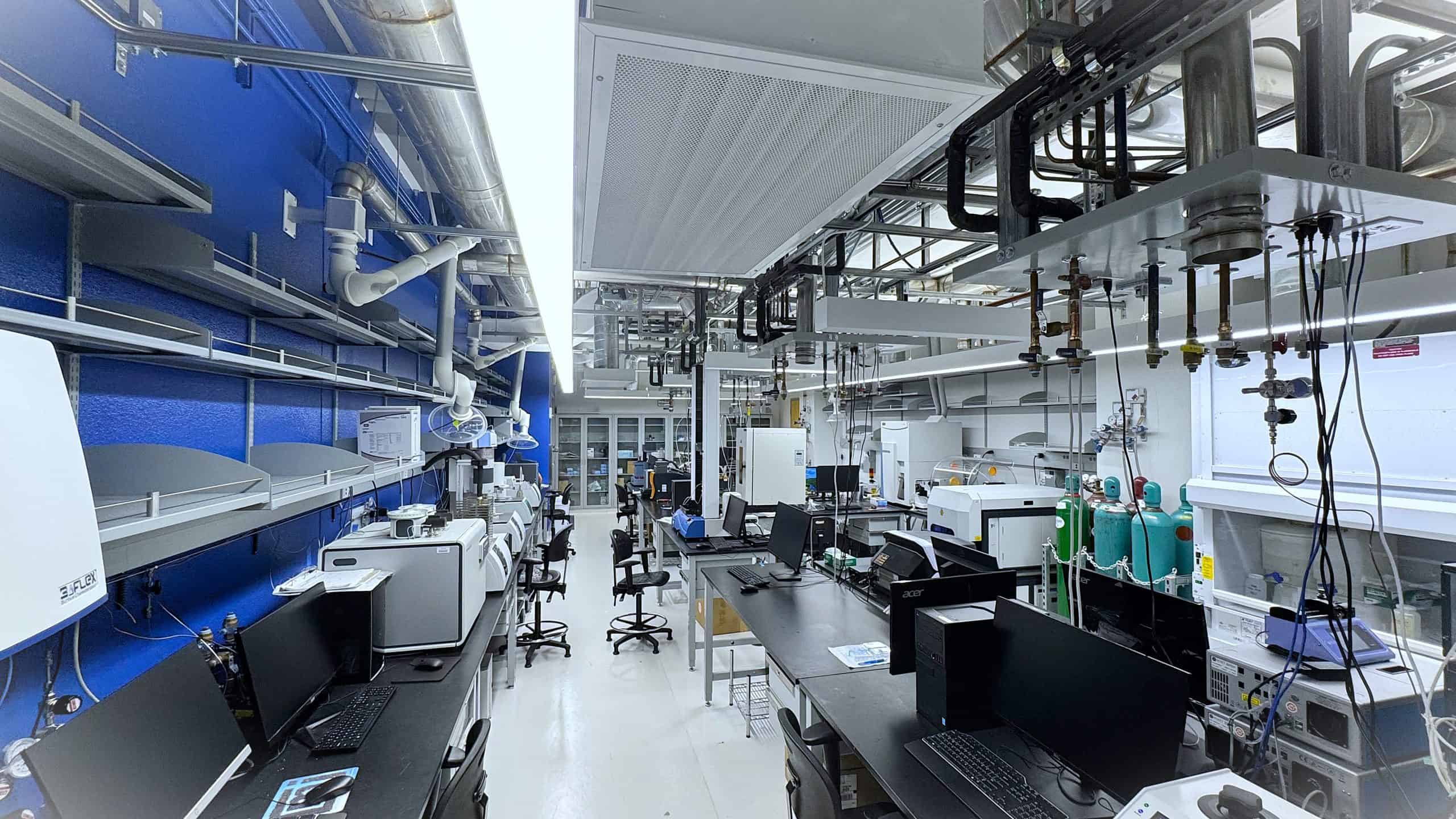
    The newly established TEMPR Facility in mid-2019 is a world-class shared laboratory for the physical property characterization and elemental analysis of bulk and thin-film biological, soft, and hard materials. The facility houses a suite of state-of-the-art characterization instruments capable of measuring materials’ thermal, elemental, mechanical, physical, and rheological properties.

    Differential scanning calorimeter provides versatile materials phase transition measurements from -90 to 400 °C. In particular, the Discovery series DSC 2500 is equipped with a new Fusion Cell™ for high sensitivity, resolution, reproducibility, and reliability. A linear autosampler allows for worry-free 24/7 operation. Modulated DSC® technology enables efficient separation of complex thermal events. Two thermogravimetric analyzers (Netzsch TG 209 F1 Libra® and TA Instruments TGA Q500) are capable of measuring materials’ mass changes at temperatures from ambient conditions up to 1100 °C with a resolution of 0.1 μg. A simultaneous thermal analyzer NETZSCH STA 449 F3 Jupiter® allows for the measurement of both mass changes and thermal effects up to 1600 °C from a single sample run. An in-line coupled system of a Bruker ALPHA II Fourier transform-infrared (FT-IR) spectroscopy and a QMS 403 D Aëolos® quadrupole mass spectrometer offers comprehensive evolved gas analysis for materials decomposition or desorption.

    A combination of a TA Instruments Discovery series HR-2 hybrid rheometer, a dynamic mechanical analyzer Q800, and an Instron 3365 Universal Testing System can measure mechanical properties of soft materials, liquids, formulations, and composites by introducing force from as little as 0.0001 N up to 500 N.

    A state-of-the-art Thermo Scientific™ iCAP™ RQ Inductively Coupled Plasma Mass Spectrometer offers ultra-trace elemental analysis at sub-ppb to ppt levels and provides elemental screening in minutes. The coupled laser ablation system with a 193 nm pulsed excimer laser allows for solid sample introduction and surface elemental profiling.

    A Waters ACQUITY Advanced Polymer Chromatography (APC) system fractionates and characterizes polymers and nanomaterials with in-series coupled Wyatt μDAWN multi-angle light scattering (MALS) and Optilab UT-rEX refractive index (RI) detectors providing a fast and accurate determination of particle sizes and distributions, absolute molecular weights of polymers, and even 3D geometric features of synthetic or natural macromolecules across a broad range of molecular weights (3000 ~ 2,000,000 g/mol).

  • What the TEMPR Learning

    What the TEMPR Learning

    We used to joke about why we chose materials science grad school over industry jobs. Doubling down, we even pursued postdoc studies, sometimes exceeding the duration of grad school. The joke? We said we cannot find jobs after college. Grad school and postdoc are ways we use to delay the reality that we have to face the real world. Deep down, we knew it was true.

    At the cusp of graduation with a PhD or five years postdoc on the CV, the reality sets in. We exhausted all options and now, we have to find a job. With a decade of academic education and dozens of peer-reviewed publications, we all think we are the perfect candidate for an independent researcher, until we are in the middle of a battle with the odds of 1/500. After the second failed attempt and some recollection, we have to convert the 10-page CV that used to make us proud into a one-page resume. Enters the grand unknown of industry. The textbook knowledge and lab skills become distant overnight. Years of experience post-graduation do not add up. The delayed reality is cruel.


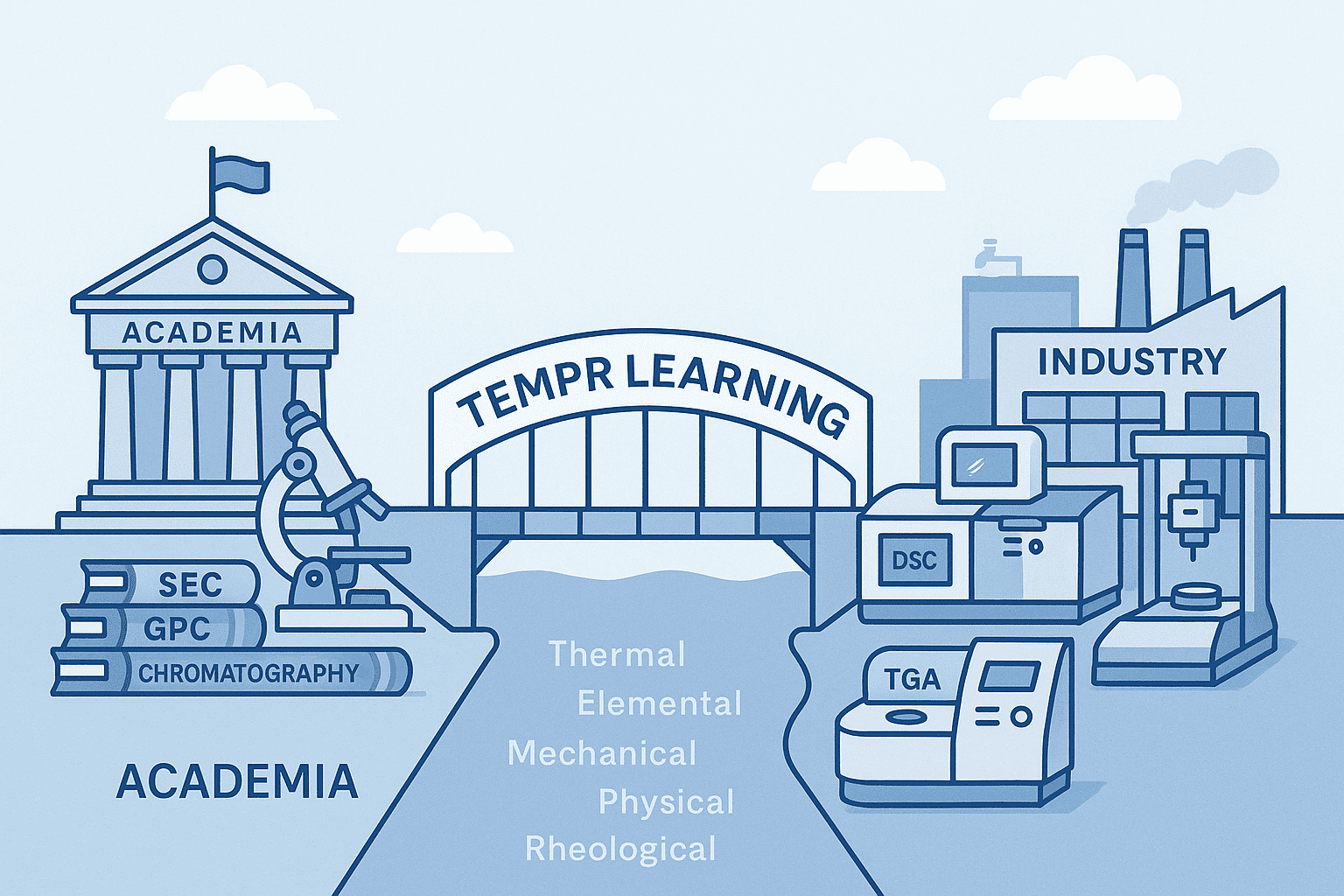
    The Gap Between Academia and Industry

    Many publications noted this gap between academia and industry (see References). Universities often focus on fundamental principles—thermodynamics, crystallography, phase diagrams—at the expense of hands-on training with real equipment. Teachers often provide ideal scenarios instead of realistic conditions. The results? These academic problems always have the right answers—perfect for testing and grading—while industry problems often don’t. To make it worse, interdisciplinary problems are entwined in most practical settings.

    Academic institutions are structured to prioritize research output and theoretical knowledge, not necessarily job readiness. Most faculty have limited industry experience and may not prioritize employability training for the same reason as the story at the beginning of this article—although they are the lucky ones in this context.

    Materials characterization techniques, in particular, are often taught in isolated courses (e.g., thermal or mechanical properties). Students may not understand how data from thermal analysis relates to the mechanical performance of a product. Beyond textbooks, classes rarely teach communication, project planning, or interpreting data for non-technical audiences—key skills in almost all careers.

    For new grads and fresh postdocs facing the industrial world, this leads to the struggle to adapt to hands-on roles involving material testing, quality control, failure analysis, or process optimization, the need to learn everything from scratch once hired, and the risk of underperformance or slow career growth due to low confidence in technical tools. Industry, on the other hand, suffers from increased onboarding time and training costs, risk of avoidable errors or poor decisions based on misinterpreted data, and bottlenecks in R&D and quality workflows.


    Bridging the Gap

    I have long been in the materials science field and experienced the pain of this gap firsthand and in a hard way. Ups and downs in this journey bring many stories to tell, although they have been buried for most of the previous years. At the 6th anniversary of leading TEMPR Lab, I finally decided to wait no more. Here it goes, TERMP Learning.

    TEMPR stands for Thermal, Elemental, Mechanical, Physical, and Rheological materials characterization techniques. TEMPR Learning is a collaborative initiative designed to bridge the gap between academic education and industry application, helping the next generation of materials scientists and engineers turn foundational knowledge into practical skills that matter at work.

    Leveraging the instrumentation in TEMPR Lab, my learning and understanding of relevant techniques, and the technical know-how from experts in various industrial fields, TEMPR Learning will create accessible content grounded in real industry workflows, highligh how thermal, elemental, mechanical, physical, and rheological tools are used in the real world, and equip the next generation materials scientist with industry ready skills, not just technical but also the best way to tell a story.

    What We Try to Solve

    Academic programs focus almost solely on equations and concepts, leaving out more important practical skills that solve real-world problems. A typical mindset expected from a new graduate researcher would be to: find something new -> make it happen -> find where it is useful -> publish it. In contrast, what the real world expects is to: identify a problem -> think of a solution -> leverage the techniques needed -> make the world a better place.

    The contrast is self-evident. Just to list some of the day-to-day skills that we hope that we learned from school: how to select the right technique under time constraints, how to interpret noisy data and to communicate findings to cross-functional teams, and how to link measurements to product decisions. The disconnect induced by a stereotypical academic thinking slows down careers and innovation.

    How We Do It

    We identified the problem. Here is a solution. We change the ways we teach, the subjects we teach, the style we interact with students, and the expectations for the graduates. Sounds appealing but vague. What about the action items and techniques needed?

    For resources, we will employ practical contexts, use-case problem solving, and career-building. We want to build a platform for new grads and early-career scientists and engineers. We’d love to see them choose and apply testing methods with confidence, present compelling stories with eloquence, communicate practical data with persuasion, and build professional reputations with assertiveness.

    For techniques, TEMPR Learning will provide real-world examples, product development workflows, and practical techniques that go beyond textbook theories. We will use case studies to show why TGA and fatigue tests matter in failure analysis and how thermal and mechanical characterizations together reveal the full picture of polymer selection.

    For actions, we will collaborate with industries and technical experts to facilitate interactive workshops, lectures, webinars, peer-to-peer storytelling, and career advice. TEMPR Learning will also focus on forging soft skills, elevating professional presence through effective communication.

    Let’s Amplify

    It is a waste of time fixating on the temporary downward spiral of the political system, even when it inflicts direct harm to education and research. We all feel and empathize. Emotions aside, we witness every day that so many inspiring figures shine the way forward. Bill Gates uses all his wealth to save the world and its people, and solve problems that most countries cannot. We might not have billions to give. But valuables are diverse. Helping is at the center stage. Let’s rise and chip in. Let’s get to work.

    I welcome you to join me on this journey. Let’s learn and grow together. We will make the world a better place, one student at a time.


    Events We are Organizing Next

    TEMPR Learning commits to free learning and mutual personal and professional growth. I am thankful for the many organizations and experts willing to participate and contribute to this initiative. Over the next few months, I will organize a series of workshops in collaboration with TA Instruments. I have been in close connection with TA Instruments for many years, and I am always blown away by how determined they are in teaching the materials society.

    Please stay tuned for the dates and times of these events. More to come.

    Workshop – Thermal Characterization (In summer)

    This workshop will cover characterization techniques in differential scanning calorimetry (DSC), thermogravimetric analysis (TGA), thermal conductivity and diffusivity testing, with cross-examination of dynamic mechanical analysis (DMA), and thermomechanical analysis (TMA). We will bring many application-focused case studies like thermal behavior of phase change materials, thermosets and photo-curable adhesives, thermal stability of polymers and composites, aging and degradation kinetics, and thermal characterization in battery electrolytes.

    Workshop – Rheological/Mechanical Characterization (In summer)

    This workshop draws on the most popular characterization techniques in the industry and will cover both mechanical (e.g., tensile/compression, fatigue, indentation, creep/relaxation) and rheological (viscosity, viscoelasticity, thixotropy, yield stress, and time-temperature superposition) aspects of practical applications. We will also meet at the intersection of mechanical and rheological testing and look at how oscillatory modulus compares to tensile modulus, when rheology can save the project while tensile can’t, and how rheology can track the cure profile of a new material.


    References

    Ramprasad, R., Batra, R., Pilania, G., Mannodi-Kanakkithodi, A., & Kim, C. (2019). Data-driven materials science: Status, challenges, and perspectives. Advanced Science, 6(23), 1900808. https://doi.org/10.1002/advs.201900808

    Chetehouna, V., Béguin, A., Vaudez, S., & Vuillaume, M. (2023). A teaching-learning framework for materials characterization: A case study on a course aimed at equipping undergraduate STEM students with a diversified characterization culture. Journal of Chemical Education, 100(11), 4446–4456. https://doi.org/10.1021/acs.jchemed.3c00974

    Journal of Chemical Education. (2024). Bridging the science practices gap: Characterizing laboratory materials and student experiences in analytical chemistry. Journal of Chemical Education. https://doi.org/10.1021/acs.jchemed.4c00744

  • Get to know about SEC-MALS

    Get to know about SEC-MALS

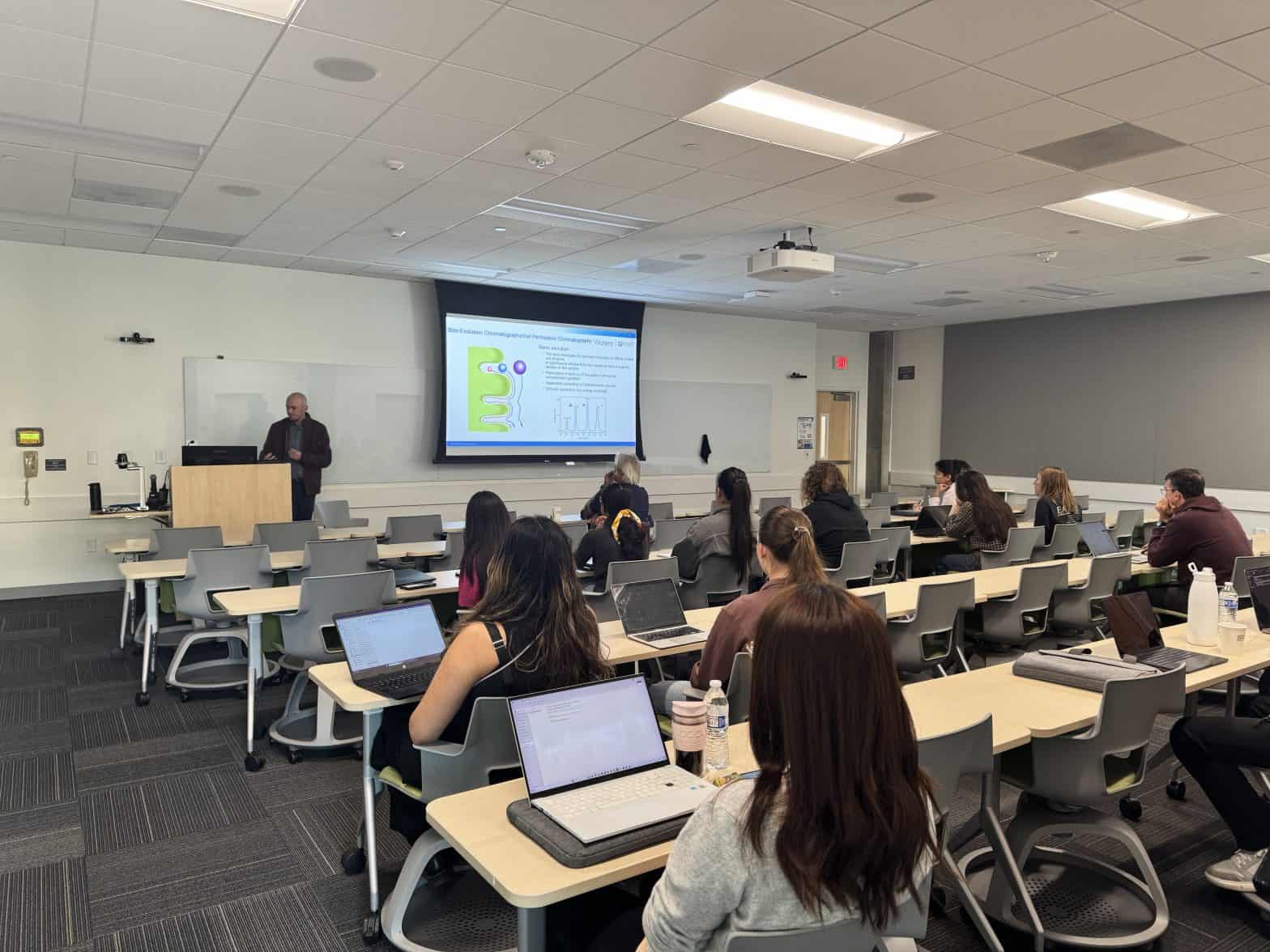
    TEMPR Learning organized its first event – the SEC-MALS Workshop – on April 3, 2025.

    More to come.

    What the Jargons

    Mixing things can be fun, we know that from watching kids putting play doughs of different colors together. It is a different story, however, if you ask them to separate them. You think, why would I want to do that? It turns out that the separation of matters is as important as mixing them, if not more, once you want to make the world a better place by being a scientist.

    SEC, size exclusion chromatography, a.k.a. gel permeation chromatography (GPC) in the polymer field, is a method for separating matters – as its name suggests – by their sizes. To make it work, a column is packed with porous beads made of materials like crosslinked dextran, agarose, or polystyrene. These beads have pores of various sizes by design. As a sample mixtures flow through the column, matters enter or bypass the pores depending on if they fit in:

    • Larger ones cannot enter any pores and therefore move faster out of the column.
    • Smaller ones visit pores of various sizes. The detour makes a long stay and is, therefore, the last to emerge.
    • Anything in between behaves intermediate in order.

    In its a little over 50 years of history, SEC has evolved into an essential tool in biotech, pharma, nanotech, and polymer industry, shaping everyday life with new materials.

    Detection Methods

    Once the matter is out of the column by size, how to tell it’s there?

    Scientists developed all kinds of ways for this purpose: optical responses, light emission, viscosity, mass spectrometry, or even better, measuring size/mass. By interacting with particles using controlled light (laser), sizes beyond the naked eye can be visualized from light that scatters off particles from different angles. This is light scattering detection at multiple angles, or Multi-angle light scattering (MALS).

    Most methods rely on reference standards to identify the unknowns by comparing them under the same conditions. Light scattering, however, determines molar mass directly from the nature of the material and how it interacts with the media and the light. This is important for materials that do not have standards to compare with. It is not a surprise that all new materials are in this arena.

    With all the tools available to us, optical absorption, refractive index, fluorescence, viscosity, and light scattering, targeted information of a given material is at hand. Moving beyond academic research, industry weighs heavy in SEC-MALS for product development and R&D, in areas of molecular biology, biomedical, pharmaceuticals, and polymer chemsitry.

    Takeaways from the Workshop

    • We get to know this important tool for separating materials and the detection methods available for researchers in different fields – biomedical, pharmaceutical, and polymer industry.
    • The conventional time method disregards material structure by comparing to standards with different conformations. Light scattering, however, takes into account the structure factors unique to each material, which offers a much more accurate picture of the substance.
    • A deep dive into the mechanism behind light scattering in real industrial settings shows how molar mass, size, conformation, and branching of polymers can be determined with SEC-MALS.
    • dn/dc, an important parameter in MALS, reflects how a certain material reacts to its surroundings. It considers chemical structures, dispersion media, environments, and light-matter interaction. Understanding the meaning of dn/dc and ways to measure it is a necessary task for the next generation of scientists transitioning from academia to industry.
    • Software, data interpretation, and data visualization in SEC-MALS help with experimental design for proposing projects, monitoring progress, and evaluating outcomes.
    • Relevant knowledgebase of practical use of SEC-MALS moves us closer to real world applications, away from the learn-for-test mindset.

    About Our Guest Speaker

    We thank Parker Lee from Waters | Wyatt Technology for joining us to discuss SEC-MALS. He joined Wyatt Technology in 2022 as a Field Application Scientist II and teaches customers light-scattering applications to improve and accelerate their research.  He earned his B.S. in Biological Systems Engineering from Virginia Tech and his Ph.D. in Macromolecular Science and Engineering from Case Western University.

    About TEMPR Learning

    TEMPR Learning is an initiative to bring together materials scientists from all sectors to share, learn, and collaborate. We want to bridge the gap between education and real life. What you learn is supposed to give you an edge to be an essential part of the world. Let’s make sure there is one.

    Join Us – Learn and Contribute

    We organize workshops, webinars, lectures, discussions, and more. Free to everyone. Join our TEMPR Learning group for all future events, learn, share, and contribute to free learning.

    References

    Porath, J., & Flodin, P. (1959).”Gel filtration: a method for desalting and group separation by means of dextran gels.”Nature, 183 (4676), 1657–1659.

    W. W. Yau, J. J. Kirkland, D. D. Bly (1979).”Modern Size-Exclusion Liquid Chromatography: Practice of Gel Permeation and Gel Filtration Chromatography.”Wiley-Interscience.

    Andrews, P. (1964).”Estimation of the molecular weights of proteins by Sephadex gel-filtration.”Biochemical Journal, 91 (2), 222–233.

  • 6th Anniversary with TEMPR Lab

    This month marks my sixth anniversary as a core member of the Irvine Materials Research Institute here at UC Irvine. I consider myself lucky to be with UC and even luckier with UCI. I am immensely grateful for the opportunity to broaden my learning in materials research and teach the next generation of scientists.

    Six years ago, I was invited to lead the establishment of TEMPR Lab, a provisional expansion to enable bulk and soft materials research at a whole new level. In a few months, we had installed more than a dozen instruments across multiple materials characterization categories: thermal, elemental, mechanical, and physical. An open house event followed and attracted hundreds of visitors.

    Everything looked bright and shiny. I was ecstatic. The pandemic hit.

    I lost my job instantly, not in the sense of paycheck (UC was generous enough to keep all of us employed even when we did nothing), but on the level of purposefulness.

    For a few months, we had organized awkward virtual games weekly so everyone still felt connected. The lab was, however, at a standstill, with most instruments in sleep mode. We paid a once-a-week visit to the lab, making sure no machine died in our absence.

    Doing nothing took a toll on me. I started gardening and web design, two of my old hobbies. Both ended up fruitful. The former provided a whole year of tomato supply, while the latter, a brand new IMRI website.

    With the momentum, I was able to market the lab remotely and communicate with researchers on and off campus. The potential users grew.

    When the lab finally opened its door to researchers in the fall of 2020, we had already accrued more than 100 users, both academic and industrial.

    Today, more than four years later, TEMPR Lab has grown to house more than two dozen instruments, initiates diverse research collaborations, and helps more than a hundred researchers each year across many academic institutions and industries.

    I am grateful again. More importantly, I feel purposeful.

    Also today, I’d launch TEMPR Learning, a collaborative effort dedicated to free learning of diverse materials characterization techniques. This effort will involve online and in person activities, video, and written know-hows, all of which to be made free to everyone who shares the passion of learning.

    Please join me on this journey and spread the words.

  • Another Review as The End of 2024 Nears

    Within this merit review period, Dr. Xiaofeng Liu has been directing UCI’s Thermal, Elemental, Mechanical, Physical, and Rheological (TEMPR) Facility. He has been overseeing more than 20 materials characterization instruments, teaching bulk materials characterization techniques, and contributing substantially to the overall management of IMRI. Dr. Liu has earned great reviews and respect from users in this position. Dr. Liu also participated actively in research activities and public services within IMRI and across the campus.

    Professional Competence and Activity

    TEMPR Facility was established in July 2019 for the analysis of bulk soft and hard materials across disciplines. The facility joined MRSEC in 2020 and serves an essential role for both on-campus users and researchers from other research institutions and local industry. The facility currently houses a suite of state-of-the-art characterization instruments. The portfolio includes thermal analysis instruments (DSC2500, DSC Q2000, DSC Polyma, TGA Libra, TGA Q500, STA), chemical and elemental analysis instruments (FlashSmart, ICP-MS, easyXAFS, EDX-7000, Aelos QMS, and Bruker FT-IR, Teledyne Laser Ablation System), mechanical and rheological analysis instruments (DMA Q800, DMA 850, HR-2 rheometer, and Instron 3365), physical analysis instruments (3Flex, AccuPyc, and APC-MALS-RI, APC-PDA-RI, and UPLC), summing up to a total of 22 instruments.

    One of Dr. Liu’s primary responsibilities is to oversee the day-to-day operations of many materials characterization instruments listed above, including instrument maintenance, serving the testing needs of academic and industrial users, teaching and training users on these instruments and related techniques, coordinating with service technicians and sales personnel to advance the characterization capability, employing educational activities to researchers across the board, leading the upgrade of the facilities, and promoting the facilities on and off campus.

    1. Dr. Liu has maintained a lab with more than 20 instruments proactively to allow for maximal up time. He has equipped himself with application-level knowledge in teaching and educating all areas that are covered by the TEMPR facility. He could work independently for troubleshooting, component replacement, and repairing other issues. Meanwhile, he has kept a close relationship with all vendors for major instrument repairs and led the effort of upgrading the instruments.
    2. Dr. Liu had provided timely instrument training sessions to users since the lab was established. TEMPR has received growing numbers of training requests each fiscal year: 259 (2021-2022), 283 (2022-2023), and 297 (2023-2024), which were submitted by 119, 144, and 125 unique users, respectively. The total number of unique users between 2021 and 2024 is 309. During these same fiscal-year periods, the total hours of instrument usage in TEMPR Lab are: 6115 hours (2021-2022), 7144 hours (2022-2023), and 8613 hours (2023-2024). The corresponding recharge incomes are: $68k (2021-2022), $75k (2022-2023), and $131k (2023-2024).
    3. Led the acquisition, installation, teaching, and maintenance of UPLC, and APC-PDA-RI under the MRSEC program between 2020 and 2024. Dr. Liu has also:
    4. Led the installation and maintenance of easyXAFS since September 2022.
    5. Led the acquisition and installation of DMA 850 in 2024 under the MRSEC program.
    6. Led the installation and maintenance of EDX-7000 in 2023 from a donation of Shimadzu.
    7. Led the upgrade efforts for Instron 3365 UTS, APC, and HR-2 rheometer in late 2024.
    8. Dr. Liu took UCI compliance training courses and maintained an up-to-date portfolio of chemical and instrumental inventories and safety-compliant documents and lab practices.
    9. Dr. Liu recruited three lab specialists working in assisting users with characterization needs as well as the day-to-day operations of the lab. These lab specialists contributed to user engagement, project services, problem-solving, instrument maintenance, lab maintenance, and marketing.
    10. Dr. Liu made great efforts in attracting external users and providing them with testing services. Staff-run project services have been completed timely to deliver high-quality testing results and technical reports to users on- and off-campus including research institutions and companies.

    Research and Creative Work

    Dr. Liu has been participating in discussing project ideas and developing research collaboration opportunities with research groups in the Schools of Engineering, Physical Sciences, and Medicine as well as startup companies and external institutions. Dr. Liu created promotional material to expand the users reach of TEMPR facility and educate users about TEMPR’s capabilities inside and outside of UCI. TEMPR facility has supported many publications in peer-reviewed journals. A selected list of publications can be seen at the appendix:12 in 2021-2022, 15 in 2022-2023, and 21 in 2023-2024.

    Dr. Liu has maintained an active research profile in line with his primary duty of overseeing the facilities. He collaborated with UCI and external researchers on ten projects. He co-first authored a research paper published in Nanophotonics (DOI: https://doi.org/10.1515/nanoph-2020-0214) during the time in TEMPR.

    1. He was a supporting person for the proposal “Fast, free-breathing, arrhythmias-insensitive, cardiac Quantitative Susceptibility Mapping (QSM) for accurate intramyocardial assessment in iron-targeted intramyocardial hemorrhagic therapy” led by Cedars Sinai Medical Center and UCLA.
    2. He provided five supporting letters for five SBIR proposals led by Ecotune.
    3. He provided a supporting letter for a project by Intelligent Optical Systems.
    4. He was a supporting person for one SBIR proposal by Versatiled.
    5. He served as consultant and co-participant for a grant titled “Ex Vivo Assessment of Muscle Fixation Techniques” led by researchers in the UCI medical school.
    6. He participated in the IMRI open house in 2022 and 2023.
    7. He participated in the MRSEC five-year review by NSF in 2024.
    8. He gave IMRI facility tours to visitors on- and off-campus.

    University and Public Service

    In addition to his job duties, Dr. Liu has been promoting the usage of new tools and software (e.g., Teams) for communication across the team and beyond to improve work and collaboration efficiency.

    Dr. Liu has also been actively involved in event organization for IMRI and CCAM. He has been part of the coordination committee for organizing the annual ISAMS and STEM school. He is also the organizing committee member of the upcoming 16th International Symposium on Ferroic Domains & Micro- to Nano-scopic Structures (ISFD-16). He has designed and maintained all relevant websites and registration workflows for these events.

    Dr. Liu served as the main person in managing, maintaining, and improving the IMRI (http://imri.uci.edu) and MRSEC (http://ccam.uci.edu) websites.

    Dr. Liu served as a contributor for the IMRI and CCAM newsletters.

    Dr. Liu led the kickstart of the Marketing Initiatives to promote IMRI and MRSEC in 2024 which includes the hiring of undergraduate marketing assistants, planning online content marketing, and conceptualizing online webinars and lectures.

  • Reviewing my first three years in TEMPR Lab

    Dr. Liu started his position as TEMPR Facility Manager on March 15th, 2019, to lead the initiative to set up the cross-disciplinary and collaborative materials characterization laboratory with capabilities of measuring thermal, elemental, mechanical, physical, and rheological (TEMPR) properties of materials in a diverse variety of research and application fields. Dr. Liu advises and collaborates in academic and industrial projects. His areas of research interests include organic materials and semiconductors, functional composite materials, and flexible integrated electronics.

    TEMPR Facility was established in July 2019, and it is a world-class shared core facility for the analysis of bulk soft and hard materials across disciplines. The facility serves both on-campus users and researchers from other research institutions and local industry. The facility currently houses a suite of state-of-the-art characterization instruments. The portfolio includes thermal analysis instruments (DSC 2500, DSC Q2000, DSC Polyma, TGA Libra, TGA Q500, STA-QMS-FTIR), elemental analysis instruments (CHNS/O, LA-ICP-MS), mechanical analysis instrument (DMA Q800 and Instron 3365), physical analysis instruments (3Flex, AccuPyc, and APC-MALS-RI), and a rheological analysis instrument (DHR-2), summing up to a total of 14 instruments.

    Since TEMPR’s opening in mid-2019, Dr. Liu has been the core contact in operating and management of the TEMPR facility, serving all users with timely response and thorough tutorials of each aspect of technical questions. Dr. Liu has earned great reviews and respects from users during the past two and a half years in this position. On top of his job duties in helping everyone in need around the lab, Dr. Liu participated actively in research activities and public services within IMRI and across the campus.

    Research and Creative Work

    The job duties as a lab manager switch the focus of active research projects and ideas to smoothly maintaining lab operations and assisting users with all kinds of research needs. Dr. Liu has adapted to his new role very quickly thanks to his experience as a lab manager in UC Santa Barbara as well as management role during his time in two separate startup companies. Dr. Liu has been participating in discussing project ideas and to develop research collaboration opportunities with research groups in the Schools of Engineering, Physical Sciences, Pharmaceutical Sciences, and Medicine. As an example, Dr. Liu proposed the use of ICP-MS technique to a number of biomedical research projects from the School of Medicine, including studies of platinum uptake in cancer cells and residual metals analysis in e-cigarettes. Dr. Liu provided one letter of support to an NIH grant application from the School of Medicine and three letters of support to small business grant applications from SBIR, EPA, and USDA. One of the small business grants from EPA was awarded in 2022. Dr. Liu had offered three in-person presentations to research groups within the Schools of Engineering and Physical Sciences and three virtual presentation and discussions to research group in the School of Medicine, CSU Long Beach, and UC Riverside. Dr. Liu also created slides material in order to promote TEMPR facility and educate potential users about TEMPR’s capabilities and distributed it to many research groups inside and outside of UCI. Dr. Liu also forged close collaboration with the Center for Isotope Tracers in Earth Science (CITIE) within the School of Physical Sciences led by Prof. Kathleen Johnson in providing analysis service and serve the local research community.

    Dr. Liu organized three onsite training courses and instrument demonstrations including (1) a two-day 3Flex onsite training course with Micromeritics (09/04/2019-09/05/2019) with 6 participants from the Schools of Engineering and Physical Sciences; (2) a nano-indenter demonstration with Optics11 on 01/17/2020 with more than 20 participants; (3) a two-day ICP-MS onsite training course with ThermoFisher Scientific (02/11/2020-02/12/2020) with 30 participants from UCI Schools of Engineering, Physical Sciences, and Medicine. In addition to running the TEMPR Facility and serving users, Dr. Liu forged research collaborations with groups at UCLA and Jilin University. The recent results are published in Nanophotonics (DOI: https://doi.org/10.1515/nanoph-2020-0214) with Dr. Liu serving as co-first author.

    Professional Competency and Activity

    Shortly after the opening of TEMPR facility to the public, Dr. Liu designed and implemented a new training request sign-up system, streamlined the sign-up process with a much more friendly user interface, and received wide acceptance and acknowledgement from users. this largely lowered the burden from new users in getting access to the facility for their benefit. Dr. Liu has also employed Google Drive system to standardize data management as well as data sharing across TEMPR Facility which provides users with cloud access to knowledge base, standard operating procedures, and other relevant references for each instrument. Since most techniques in TEMPR facility require substantial knowledgebase to understand or even operate the instruments, Dr. Liu has been maintaining an active database of technical documents and presentations related to the thermal, elemental, mechanical, physical, and rheological properties of materials, which are either originally created or secured through personal contacts with technology companies and individuals.

    Dr. Liu recruited four student lab assistants – three current UCI graduate students and one postdoctoral researcher from the Schools of Engineering and Physical Sciences – to assist users with thermal, elemental, mechanical, and physical property characterization, respectively. These four lab assistants contribute to user engagement, project services, problem-solving, and instrument maintenance.

    TEMPR has been operated for two years during the review periods plus a half year in 2021. During the first year of operation, 92 unique users from UCI, other universities, and industry have been trained to use one or more TEMPR instruments. In addition, Dr. Liu has coordinated staff-run experiments for 20 researchers with the lab assistants with 13 researchers not trained on TEMPR instruments which makes the total number of users who made use of TEMPR is 105. The second year, TEMPR added 41 additional unique users and 16 return users. Staff-run projects were performed for 19 researchers in which 14 are not trained which makes the total number of people who made use of TEMPR in its second year is 71. the total number of users added per year per instrument is detailed in Table 1.

    The first year of operating TEMPR has achieved a total of 4510 hours of instrument use and $47,532.5 in recharge income, while user-run experiments account for 4,351.5 among these hours and 77.2% of the income. TEMPR had a total of 7,404 hours of instrument use and $84,329 in recharge income in its second year of operation, a 64% increase in usage hours and a 77% increase in recharge income, respectively, compared to year 1. User-run experiments accounted for 6,829 of these hours and 74.7% of the income during year 2.

    Table 1. Number of New Users added Per Year Per Instrument

      Number of New Users
    Instrument 07/2019-06/2020 (Year 1)07/2020-06/2021 (Year 2)07/2021-01/2022 (7 months)
    DSC 2500 1497
    DSC Q2000 821
    DSC Polyma 802
    TGA Libra 1163
    TGA Q500 1142
    STA-QMS-FTIR 3567
    FlashSmart 634
    ICP-MS 18164
    LA-ICP-MS 0122
    DMA Q800 24813
    Instron 688
    APC-MALS-RI 1636
    3Flex 16115
    DHR-2 Rheometer 15109
    AccuPyc 502

    Staff-run project service is a central effort in attracting potential users from local research institutions and companies. In sum, 27 projects in year 1 (2 projects done by two lab assistants), 49 projects in year 2 (5 projects done by one lab assistant), and 32 projects for the 6 months in year 3 were carried out in a timely manner coordinated by Dr. Liu and lab assistants. These staff-run experiments accounted for the 158.5 hours and 22.8% of the income during the first year, while 575 hours and 25.3% of the income were recorded for year 2, an increase of over 260% in staff hours and over 95% in recharge income as compared with year 1.

    In particular, usage hours and recharge incomes for the major instruments in TEMPR are summarized below. During the first year of operation, STA-QMS-FTIR recorded 1,936.5 hours (42.9% of total TEMPR usage hours), representing $17,535 in recharge income (36.9% of total income). The second, third, fourth, and fifth most used instruments are the 3Flex (658.5 hours, 14.6% of total TEMPR usage hours; $3,925, 8.3% of total income), the Q800 DMA (539.5 hours, 12% of total usage hours; $4,695.5, 9.9% of total income), the DSC 2500 (314 hours, 7.0% of total usage hours; $2,685, 5.6% of total income), the ICP-MS (217.5 hours, 4.8% of total usage hours; $4576.5, 9.6% of total income) respectively. The other nine instruments represent a combined 18.7% of total usage hours and 29.7% of total income. Going into the second year, STA-QMS-FTIR was used for 2,933 hours (39.6% of total TEMPR usage hours), representing $28,893 in recharge income (34.3% of total income). The second, third, fourth, fifth, sixth most used instruments are the 3Flex (1,638 hours, 22.1% of total TEMPR usage hours; $12,574, 14.9% of total income), the ICP-MS (602 hours, 8.1% of total usage hours; $19,616, 23.3% of total income), the Q800 DMA (588 hours, 7.9% of total usage hours; $3,839, 4.6% of total income), the DSC 2500 (413 hours, 5.6% of total usage hours; $6,210, 7.4% of total income) and TGA Libra (413 hours, 5.6% of total usage hours; $2,864, 3.4% of total income), respectively. The other eight instruments represent a combined 11.1% of total usage hours and 12.1% of total income.

    With comparison between year 2 and year 1 during the short time period of TEMPR operations, it is foreseeable that the future perspective is rapidly ramping up, especially based on the fact that TEMPR offers unique technical aspects across a large geographical area with professional staff support.

    University and Public Service

    In addition to his job duties, Dr. Liu has been researching on competitive facilities management systems with the aim of improving working efficiency as well as expanding management capacity from the existing system. Dr. Liu has also been actively involved in event organization for IMRI. He has been part of the coordination committee for organizing ISAMS-2, ISAMS-3, and ISAMS-4 on a yearly basis. Dr. Liu designed and deployed the entire IMRI (http://imri.uci.edu) and MRSEC (http://ccam.uci.edu) websites from scratch during the COVID period and is served as the main contact in maintaining and improving the websites.

  • Statement of Research Interests

    Statement of Research Interests

    Scope of Research

    My research interests center on organic semiconductors and functional composite materials regarding computer-aided materials design, sustainable synthetic protocols, solid-state morphology manipulation, and applications in integrated energy transduction devices. The state-of-the-art research efforts in organic semiconductors allow for relatively well-predicted and modulated molecule-level properties by virtue of synergic computational structure design and synthetic organic chemistry. Thinking from a material perspective, however, one needs to consider how the structure and property of a given isolated molecule relate to its aggregated polymorphs, and more importantly, how these polymorphs can be achieved controllably to reveal useful functionalities in favor of high-efficiency semiconducting devices modules.

    The ultimate goals of my prospective research are to draw guideline correlations between material chemical structures and their bulk properties (e.g., optical, electronic, thermal, and mechanical) and device performances, and thus promote guidelines from materials design and commercialization. My research will be dedicated to addressing the challenges and understanding: (1) how a given material can be produced efficiently with a positive environmental impact, (2) to what extent molecular conjugation can be controlled in 2- or 3-dimensions and correlation to the consequent properties, (3) how well materials properties may be manipulated employing supramolecular chemistry and molecular self-assembly, (4) real-time visualization of materials bulk nanostructures using non-destructive techniques, and (5) how reliable materials design and morphology control would fulfill specific device requirements and long-term durability. With the aim for energy efficient research frontier, my current research proposals are in line with the demand from many federal agencies, such as DOE, ONR, DARPA, and NSF. I will also organize research and grant proposal collaborations with federal research institutions, especially with national lab facilities such as Advanced Light Source (ALS) and Stanford Synchrotron Radiation Lightsource (SSRL).

    Two years of independent research at UC Santa Barbara and two years leading startup activity at UCLA equip me with rich experiences in research diversity and collaborations, as well as broad scope from fundamental science to rapid commercialization. I have been leading federal grant proposal preparation both at the academic and small business levels. My research perspectives can strengthen fundamental research and establish long-term collaborations both internally and with other institutions.

    I would like to pursue my research goals by implementing the following three inherently related research perspectives, looking at:

    (1) Molecular design of 2- and 3-dimensional (2D and 3D) organic semiconductors and how these molecular candidates can be prepared under environmentally friendly synthetic protocols;

    (2) Delivering useful functionalities from aggregated molecular polymorphs through supramolecular chemistry;

    (3) A synergic consideration of material design, processing, and device structure engineering to reveal the next generation of adaptive organic electronic devices.

    2-Dimensional and 3-Dimensional Organic Semiconductors: Sustainable Catalysis, Structure-Property-Function Relationship, and Optoelectronic Application

    Figure 1. (A, B) Synthesis of organic semiconductors via green chemistry with metal cluster catalysis. (C) 2-Dimensional structural expansion of organic semiconductors. (D) Studies of how molecular dimensions and symmetry affect materials properties.

    Synthetic protocols provide means en route to a rich library of organic functional materials in favor of specific requirements for use in optoelectronic devices. Coupling reaction between arenes is one of the key steps in preparing organic p-conjugated materials. The common approaches, such as Suzuki and Stille reactions, require the use of Pd0 as a catalyst, e.g., Pd(PPh3)4 and Pd2dba3.[1] Such Pd0 species often suffer from irreversible agglomerate during reaction thus leads to ceased reactivity, which also adversely affects the quality of the polymers.[2] During my Ph.D. studies, I have developed a new synthetic pathway in realizing surfactant-free gold atomic clusters in boiling N,N-dimethylformamide (Figure 1A),[3] which can further be adopted for other noble metals, e.g., platinum, palladium, and silver. The resulting metal clusters can be dispersed in water and show stability over months under ambient condition. A relevant study by Prof. Kawasaki has shown possible to incorporate such Pd0 clusters in Suzuki coupling reactions,[4] which can be readily recycled without losing its catalytic activity. Considering organic semiconductors often require hash reaction conditions and toxic solvent environment, my intention is to optimize the synthetic protocol of such Pd0 clusters and to explore the potential application in promoting synthesis of conjugated materials in green reaction media under both Suzuki coupling and direct arylation reaction manners (Figure 1B).[5] It is worth noting that such reaction manner may greatly simplify the post purification process of conjugated materials, e.g., with precipitation and extraction, rather than conventional chromatography, which in turn, reduces potential consumption of organic solvents. In a general perspective, these Pd0 clusters could potentially be employed in substitution of all current commercial Pd0 catalysts, by providing a more cost-effective and environmentally friendly yet high efficiency production. A successful prototype study will also open up opportunities to optimize systematically a variety of organic reactions that involve other transition metal catalysis.

    Upon establishing reliable synthetic protocols, one intends to develop organic semiconductors that allow for charge transport along 2-dimension (2D), structurally alike graphene derivatives. Theoretical model (e.g., density functional theory, DFT) will be carried out to assist in molecule design and prescreen of electronic properties in a single-molecule level in the gas phase.[6] Figures 1C and 1D illustrate examples

    Figure 2. Examples of 2D molecules with local electron rich and deficient regions.

    where conjugation extension is possible along various molecular edges. Carbon-carbon coupling and visible-light triggered ring-closing reactions are proposed to be implemented during materials synthesis. Energy band-gaps of these molecules can be well tuned by incorporating building blocks with varied electron affinities. As illustrated in Figure 2, chemical doping with boron or imide to a given 2D molecular framework will give rise to a local electron-deficient region (denoted as red), while nitrogen doping or pedant electron-rich moieties, e.g., thiophene or pyrrole, would create electron-rich areas (denoted as blue). Efficient 3-dimensional charge transport could thus be guaranteed, i.e., both along molecular backbone and through layered p-p stacking direction (Figure 2, lower right). The optical, electronic properties of these 2D molecular “sheet” and layered aggregates are to be studied in correlation with their structural features. Enlarged p-conjugation plane will potentially strengthen intermolecular interactions through electron delocalization. The resulting layer-by-layer stacking of these chromophores may initiate new opportunities for understanding fundamental questions (e.g., charge transport dynamics and possible pathways) in organic semiconductors research.

    Figure 3. Modulation of molecular conjugation through redox chemistry (left) and photo irradiation (right).

    Molecular structure-property relationship has been a long-standing topic in material chemistry research. Much of current efforts are case-specific within each individual molecular structure and far less general in interpreting a guideline picture. A substantial further study is in urgent necessity to provide a more general relation that may direct structure design of a rich library of molecules. We would invest efforts to study systematically how changes in molecular structures affect materials properties, particularly in the regard of molecular length and symmetry. Molecular weights of conjugated polymers have proven deviating materials properties, for example charge carrier mobility, among several orders of magnitude. The challenges in drawing a clear conclusion from polymeric materials come from their statistic distribution of chemical structures as well as poor control over a certain molecular weight and polydispersity. Molecular materials, in contrast, possess well-defined chemical structures, given by controllable reaction selectivity in organic synthesis. A previous study done by Prof. Briseno showcases a series of poly-3-hexylthiophene analogues with precisely controlled molecular lengths.[7] Similar protocol can be adopted for studying intrinsic structural features in a series of structurally well-defined electron-donor (D) and electron-acceptor (A) alternating molecular frameworks, as shown in Figure 1D. Structural precision in such D-A molecules give rise to a more quantitative information on how subtle chemical structure changes can impact material bulk properties, and even more relevant, how electron delocalizes within donor-acceptor structures and how far the delocalization can occur and stabilize, i.e., the effective saturation length for electron transitions. In addition, the effect of molecular symmetry on their properties will be found on the basis of the well-defined chemical structures in this molecular systems. A more comprehensive series of studies may provide critical information for chemists interested in structural transition from molecules to polymers, for physicists interested in how structural alteration may be translated in interpreting electron and energy transfer mechanisms, and for device engineers who are eager to reliable high performance device architectures.

    Materials properties correlate directly to the molecular conjugation, which guarantees pathways for intramolecular electron communication. The capability to modulate conjugation structures within a given molecule through external treatments will thus provide tunable material electronic properties without introducing extra synthetic efforts. Interchangeable conjugated and non-conjugated molecular structures can happen with careful design of chemical structures, two of which are depicted in Figure 3. One proposed molecular segment contains a thiophene-fused pentalene backbone with two N,N-dimethylaniline (DMA) pendant moieties. Conjugation along molecular backbone is not accessible in the neutral state. However, oxidation can lead to the formation of a quinoid structure that allows for conjugation along both backbone and pedant DMA units (Figure 3, left). Conjugation switch in another system, shown in Figure 3, right, can be readily modulated by photo irradiation. These molecular segments, when built into a conjugated polymer or molecule, are able to show well-regulated behaviors (e.g., optical and electronic properties) by means of external stimuli, which could enable smart device applications relevant to energy conversion and light emitting applications.

    Manipulation of Material Structure and Property via Supramolecular Approaches

    On the pursuit of high-performance optoelectronic devices, light-weight and flexibility are emerging as urgent demands. In realizing such needs, organic materials are of great interests being the next generation semiconductor with respect to the inorganic counterparts. Recent efforts suggest that device performance of organic materials is comparable, sometimes even superior to the inorganic-based devices. The current challenge remains that, it is often impossible to guarantee a reliable device performance from a given organic material. The reason behind is the fact that how molecules aggregate to form functional bulk cannot be well predicted and controlled. The possible solution that could enable general optoelectronic applications of organic materials falls to how one can manipulate isolated molecules to form reproducible bulk structures in a controllable manner. This is particularly important for the state-of-the-art solution-processing technique (e.g., spin casting, inkjet printing, and blade coating, etc.).[8]

    While synthetic methodologies can raise a large variety of molecular structures, supramolecular chemistry and molecular self-assembly provide necessary means to organize material nanostructures beyond the single-molecule realm. This part of research will initiate the design of materials with consideration of molecular shape and functional pending groups for intermolecular recognitions. Molecule “ring” and “wire” can be built with an alternating donor and acceptor conformation (Figure 4A). The pedant side chains are designed to promote solubility and both polar and nonpolar functionalities. Molecular internal dipole moments can also be modulated accordingly, which is believed to direct molecular aggregation preference in the solid state.[9] Dielectric constant of the intrinsic

    Figure 4. Supramolecular chemistry, molecular self-assembly, and real-time structural characterization of organic semiconductors thin films.

    materials or the surrounding solvent media is another important parameter in consideration. The foci of studying these molecules are to monitor how the above-mentioned parameters may induce intermolecular interactions when an isotropic solution is in the process of concentrating (or drying). Limited voids between molecules along with driving force from p-p stacking may induce molecular aggregates to form a semi-stable phase that possesses a certain degree of molecular ordering, which is also known as lyotropic-like liquid crystalline phase.[10] Such semi-stable phases may be revealing in translating molecule level packing to macroscopic device functions.

    To understand the transition from solution to solid state of a given molecular material is critical for practical application. Molecular self-assembly can be optimized by controlling a number of molecular intrinsic parameters (e.g., molecular geometry, surface energy, and dipole moment) as well as external environmental factors (e.g., solvent polarity and temperature) that can be optimized in directing molecular self-assembly of interest (Figure 4B).[11] In particular, interfacial surface energy engineering may induce preferable molecular orientation during film formation, which can be quantitatively described as polar and nonpolar surface energies.[12] A combination of contact angle measurement and structural characterization techniques (e.g., X-ray scattering and electron microscopy) will be employed to draw correlation between molecular orientation and surface energy. Molecular materials can also

    Figure 5. Chemical principles that can be used in post-deposition treatments.

    self-assemble, based on control over electrostatic dipole moment, solution polarity, and temperature, into either kinetically or thermal dynamically stable nanostructures (e.g., nanowires and micelles). These pre-organized nanostructures are expected to maintain their superstructures when transitioning to solid states. A combination of characterization tools will be implemented to provide direct visual evidence, and even real-time tracing of structure evolutions. Figure 4C shows geometries that in-situ spectroscopic ellipsometry[13] and X-ray scattering[14] are applied while (1) thin films are being treated under solvent or thermal annealing, (2) molecules self-assemble during film formation, and (3) the formation of lyotropic liquid crystals during solvent evaporation of a concentrated given solution.

    Post chemical modification of known materials upon film formation can be useful for tuning material property without disturbing the existing bulk structures, such as Diels-Alder, thiol-ene “click” reactions, and electrophilic addition. All these manners would afford nondestructive modification of film optical and electrochemical properties. Figure 5 illustrates two possible ideas where Lewis acid can be used to modify molecular charge transfer states, with electrophilic addition reactions to either azulene or electron-rich alkyne groups. The emergence of an extra charge transfer complex, which is perpendicular to the donor-acceptor conjugation direction, allows one to be able to modulate electron transitions independently along these two directions. Of particular relevance is that, with respect to organic solar cell application, such versatile “chemical doping” strategies provide possibility to create panchromatic organic materials. In particular, a strong D-A pair along the molecular main chain can create a narrow optical energy gap (e.g., 1.2 eV), while the pedant D’-A’ pair may be modulated in order to generate a photon absorber at higher energy edge (e.g., 1.8 eV). The complementary photon absorption profiles can pave a path toward a significantly higher power conversion efficiency in organic thin-film solar cells. A systematic study will be carried out in order to look into to what degree changes of molecular structures and properties can be affected by stoichiometry of Lewis acid addition. Original synthesis and post modification of material structures will provide a powerful toolbox to assist in understanding fundamental research questions on how molecules aggregate, and, ultimately, draw general guidelines for reliable device performance and future material design.

    Flexible Organic Energy Transduction Devices and Integrated Systems

    Streamline material design, synthesis, and structural manipulation will certainly enable high-performance candidates for use in semiconducting devices to address energy and environmental concerns, e.g., photon-electricity conversion, photosynthesis, and organic spintronics. Biomimetic processes relevant to energy harvesting, conversion and storage have been long dominated by inorganic semiconductors mainly due to their high dielectric constant and charge carrier mobility.[15] In fact, the structural diversity of organic semiconductors hold great potential in precisely tune molecular frontier orbital energy levels, i.e., the highest occupied molecular orbital (HOMO) and the lowest unoccupied molecular orbital (LUMO), which can enable candidates as substitution for inorganic counterparts.

    Figure 6. Materials design and processing for applications in single-component ideal-structure organic solar cells (A) and lyotropic liquid crystal driven molecular self-assembly for use in devices with anisotropic charge transport behavior (B).

    As an example, an ideal light-harvesting material would require an efficient overlap with solar spectrum. Current research focuses on solar energy conversion is mostly dominated by using the classic two-component bulk heterojunctions.[16] Fullerene derivatives are frequently used to promote efficient exciton dissociation that eventually drive an electric circuit. Thinking from a different perspective, molecular materials can be designed to favor functional single-component organic photovoltaic devices, shown in Figure 6A, as an ideal-structure organic solar cell. The proposed molecule should have an energy band-gap of 1.5 eV, corresponding to an absorption onset of c.a. 830 nm. Molecular geometry will be optimized to elevate efficient intermolecular electron communication. An ambipolar charge transport characteristic is adequate for transport of both electrons and holes. Moreover, a strong internal dipole moment will be an important design factor to guarantee a long-living charge separated state.[17] A working energy diagram is shown in Figure 6A, right. Considering the relatively short exciton diffusion length (< 20 nm) of common organic semiconductors, it is reasonable to fabricate nanowire structures of ZnO along the substrate normal. The length and diameter of such nanowires will be optimized in maximizing device efficiencies (Figure 6A, middle). The combination of molecular materials with ambipolar charge transport behaviors and plasmonic effect from nanostructured cathode/anode buffer layers could potentially open the door to fullerene-free solar cell devices, and, more importantly, greatly simplified solid state structure that can be easily modeled and interpreted. Another important intention is to evaluate these organic semiconductors in spin valves and collaborate with theorists and physicists in guiding materials design principle to reveal the next-generation more efficient and robust solar cells.

    Lyotropic liquid crystalline materials (as designed in previous section) tend to form textured domains in concentrated suspensions. Molecular alignment or crystal seeds induced directional crystallization may be applied to drive large-area crystalline films (Figure 6B).[18] Anisotropic charge transport behavior is expected when applying bias either along or perpendicular to the p-p stacking direction. Charge carrier (electron or hole) mobility obtained along the p-p stacking (denoted as m1) is likely several orders of magnitude higher than that measured at 90° with respect to the alignment direction. The anisotropy in crystallites orientation and electronic properties correlates principally to molecular intrinsic structures. The understanding obtained from processing one given molecule can provide useful information on how one should optimize the current molecular framework, or design new structures to tackle specific issue.

    Figure 7. Proposed chemical structures of main-chain conjugated polyelectrolytes (left) and oppositely-charged block copolymer electrolytes (right).

    One of the challenges researchers are currently facing is the rising environmental impact from material production and processing, during which highly toxic solvents, such as chloroform, chlorobenzene, and iodoalkane, are often used. Moving toward large-scale production and application will certainly increase health risk brought by the leftover toxins. There are increasing efforts that people start noticing the importance of greener processing of organic materials.[19] Well-gifted from structural tunability, organic conjugated materials can be designed to be compatible with low-toxic solution processing. Figure 7 shows molecular systems that will be considered for possible water soluble organic semiconductors, by introducing ionic functionalities either along the conjugated backbone (left) or as pedant side groups (right). The highly planar and electron-delocalized structures can foster electron communication when transitioning from solution to solid state. Positive charges within the polymer backbone are likely to promote a more electron-deficient local environment, hence increase the chance for interchain interaction with the near donor moieties. A stronger charge transfer state in the aggregated morphology is expected to expand the photon response approaching the infrared region, which could also find utilities in bioimaging and tracing of biological processes. A structural design with focus on the side chains can give rise to a block copolymer (Figure 7, right) with both crown ether and ionic groups. The strong coordinating tendency between crown ether and alkali metal cation can transform the as-proposed structure into an ion-dissociated conformation. The Coulombic interaction from the oppositely-charged side chains will probably enable strong interchain aggregation even under aqueous environment. In addition, these ionic organic semiconductors can be found useful also as interfacial modifiers when incorporated in between organic layers and metal/semiconductor electrodes, which are possible to tune work functions, surface energy, and doping state.

    An efficient and durable organic photovoltaic device module is not ideal solution to our energy demands. One obvious reason is that these devices heavily rely on available light source. Practical application requires one to consider, more importantly, how the electric energy generated from light harvesting can be stored or transformed into chemical substances for potential future use.[20] Photon-initiated electron generation in inorganic semiconductors has been an emerging technology in mimicking natural photosynthesis for efficient carbon capture and fuel generation.[21] Organic semiconductors have been paid much less attentions due to its poorer charge separation efficiency and competitive charge recombination; results mostly from an overall low dielectric constant. However, organic materials possess apparent benefits over the inorganic counterparts in the aspects of processability, production cost, and structural diversity. Much of these properties of organic semiconductors can be well predicted and modulated during material preparation. Figure 8 illustrates an example of an artificial photosynthesis system that utilizes organic semiconductor as light absorber for exciton generation. H2O and CO2 are chosen to be oxidation and reduction source chemicals in order to

    Figure 8. A photosynthesis system powered by organic semiconductors for the purpose of storing energy into chemical substance.

    evaluate the device performance and help understanding the basic operation processes unique to the intrinsic organic semiconductors.

    An early attempt will be initiated by designing organic dye molecules with the intention of narrow band-gap (~1.4 eV), appropriate molecular orbital energy levels (EHOMO = -5.1 eV, ELUMO = -3.7 eV), and a large internal electrostatic dipole moment. The molecular design will be performed by employing density functional theory. A systematic study of structure-performance correlation will be followed up in optimizing the power conversion efficiency of the photoelectrochemical synthesis cell. Particular research emphasis will be put forward in identifying new molecular structures as substitutions to the existing ruthenium complexes,[15] applying the device in catalyzing organic oxidation and reduction reactions for organic methodology and material preparation, and creating possible cooperation with microorganisms in bioelectronics applications.

    The joint efforts from organic chemistry and materials science create a unique perspective to further the research advancement in the next generation of organic semiconductors. I dedicate my research to the generalization of organic materials in optoelectronic device applications, exploring new molecular materials for high-performance, easily reproducible, and environmentally durable semiconducting device modules. Moreover, environmentally friendly and degradable organic product is an emerging must. Upfront research efforts are necessary to bring the attention of sustainability to our worldwide research community.

    References

    1. Carsten, F. He, H. J. Son, T. Xu, L. Yu. Chem. Rev. 2011, 111, 1493.
    2. T. Nielsen, K. Bechgaard, F. C. Krebs. Macromolecules 2005, 38, 658.
    3. Liu, C. Li, J. Xu, J. Lv, M. Zhu, Y. Guo, S. Cui, H. Liu, S. Wang, Y. Li. J. Phys. Chem. C 2008, 112, 10778.
    4. Hyotanishi, Y. Isomura, H. Yamamoto, H. Kawasaki, Y. Obora. Chem. Commun. 2011, 47, 5750.
    5. G. Mercier, M. Leclerc. Acc. Chem. Res. 2013, 46, 1597.
    6. Liu, Y. Sun, B. B. Y. Hsu, A. Lorbach, L. Qi, A. J. Heeger, G. C. Bazan. J. Am. Chem. Soc. 2014, 136, 5697.
    7. Zhang, N. S. Colella, F. Liu, S. Trahan, J. K. Baral, H. H. Winter, S. C. Mannsfeld, A. L. Briseno. J. Am. Chem. Soc. 2013, 135, 844.
    8. C. Krebs, J. Fyenbo, M. Jorgensen. J. Mater. Chem. 2010, 20, 8994.
    9. J. Takacs, Y. Sun, G. C. Welch, L. A. Perez, X. Liu, W. Wen, G. C. Bazan, A. J. Heeger. J. Am. Chem. Soc. 2012, 134, 16597.
    10. -G. Kim, E. J. Jeong, J.W. Chung, S. Seo, B. Koo, J. Kim. Nat. Mater. 2013, 12, 659.
    11. Liu, Y. Li. Dalton Trans. 2009, 6447.
    12. E. Widjonarko, P. Schulz, P. A. Parilla, C. L. Perkins, P. F. Ndione, A. K. Sigdel, D. C. Olson, D. S. Ginley, A. Kahn, M. F. Toney, J. J. Berry. Advanced Energy Materials 2014, DOI: 10.1002/aenm.201301879.
    13. V. Madsen, K. O. Sylvester-Hvid, B. Dastmalchi, K. Hingerl, K. Norrman, T. Tromholt, M. Manceau, D. Angmo, F. C. Krebs. J.Phys. Chem. C 2011, 115, 10817.
    14. D. Treat, C. G. Shuttle, M. F. Toney, C. J. Hawker, M. L. Chabinyc. J. Mater. Chem. 2011, 21, 15224.
    15. M. Schultz, T. P. Yoon. Science 2014, 343, 1239176.
    16. Dennler, M. C. Scharber, C. J. Brabec. Adv. Mater. 2009, 21, 1323.
    17. Carsten, J. M. Szarko, H. J. Son, W. Wang, L. Lu, F. He, B. S. Rolczynski, S. J. Lou, L. X. Chen, L. Yu. J. Am. Chem. Soc. 2011, 133, 20468.
    18. Diao, B. C. Tee, G. Giri, J. Xu, D. H. Kim, H. A. Becerril, R. M. Stoltenberg, T. H. Lee, G. Xue, S. C. Mannsfeld, Z. Bao. Nat. Mater. 2013, 12, 665.
    19. Irimia-Vladu, M. Soc. Rev. 2014, 43, 588.
    20. DeBlase, C. R.; Silberstein, K. E.; Truong, T. T.; Abruna, H. D.; Dichtel, W. R. Am. Chem. Soc. 2013, 135, 16821.
    21. Kenney, M. J.; Gong, M.; Li, Y.; Wu, J. Z.; Feng, J.; Lanza, M.; Dai, H. Science 2013, 342, 836.