
Blog

  • The Scarecrow Competition in Solvang

    October 2012 — Solvang, A Little Danish Town

    Solvang, the charming Danish-style town less than 40 miles from Santa Barbara, always feels like a hidden gem. The drive alone is beautiful, and within an hour, you’re transported into a slice of Europe—something rare in most parts of the world.

    We’ve visited many times, but each trip still lights up our eyes. With a population of just over 5,000, Solvang is bursting with warmth and creativity. It’s the kind of place that leaves you both physically and emotionally refreshed.

    Whenever a traditional holiday approaches, the entire town transforms with festive decorations. Every storefront showcases its own imaginative twist. I’ve lived in the U.S. for three years now, and this year, I decided to truly celebrate Halloween for the first time. Maybe I’m finally starting to integrate into the rhythm of American traditions.

    It was a bright Saturday morning when we arrived, walking and exploring along the way. We got to Solvang around 11 a.m., still running on empty stomachs but eager to wander.

    The town was hosting its Third Annual Scarecrow Creative Contest. True to its name, scarecrows—intended to scare crows, of course—lined the streets in every imaginable form. Each store had brought out its best ideas, and tourists could vote for their favorites.

    Danish flags fluttered above the streets, adding to the festive mood.

    You might not believe this is late autumn in Solvang. The wide-angle lens on my camera didn’t exaggerate—it simply captured the striking atmosphere. Fallen leaves scattered across the central lawn reminded us that, yes, autumn had arrived.

    Outside an old watch shop stood a fairytale-like wooden cuckoo clock. I ended up waiting there 15 extra minutes, just to catch the little bird pop out to chime the hour.

    Next to it, a pumpkin-man stood by the door—complete with working clock hands to show the time.

    Storefront windows were filled with dazzling displays. If you’re visiting for the first time, you’ll likely feel overwhelmed in the best way.

    A pumpkin zombie uncle sat at a street corner, holding a severed hand with eerie calm.

    A roadside horse sculpture caught my eye—something about it felt oddly grim.

    Another pumpkin character lounged nearby, sipping wine as he watched the street life roll by.

    A pumpkin Viking guarded the door of a coffee shop—more curious than fierce, almost like another tourist.

    Above a nearby house, a bird perched silently on the chimney. Don’t worry—it’s not real.

    Would you spend a night in one of Solvang’s quaint hotels? Each building here is unique—nothing like the gray concrete jungles we know. Bright colors dominate the palette. That’s just the Solvang style.

    Jingling horse-drawn carriages serve as public transport for tourists. Neat little pouches behind the horse keep things tidy and eco-friendly.

    On one corner, a clown encouraged passersby to vote for his scarecrow.

    Some entries, like the one made by Art Hus, were a bit rough around the edges—but that’s part of the charm.

    There’s a calm, leisurely spirit that defines Solvang. It makes you slow down without realizing it.

    Even politics found its way in: one older gentleman—clearly a Republican supporter—rode around town, spreading his message. The U.S. election was everywhere that year. I couldn’t help but wonder, when will we have that kind of voice?

    At a local bakery, their scarecrow had a face and hands made entirely of bread.

    The bakery window display made my stomach growl. That was my cue—I headed into a small restaurant for lunch.

    Of course, no October visit would be complete without pumpkins. So off we went to the pumpkin patch. See you there!
  • Biggest Bacon Veggie Roll Ever

    November 2011 – Red Rock Canyon State Park

    Red Rock Canyon State Park lies along California Highway 14, about 200 kilometers north of Los Angeles and just 40 kilometers from the town of Mojave. Our original plan was to head straight for Death Valley, but while researching the route, we stumbled upon this lesser-known gem. What a fortunate detour it turned out to be. Red Rock Canyon’s vibrant desert cliffs and otherworldly rock formations make it a striking stop—offering not only natural beauty but also opportunities for camping, hiking, horseback riding, and sightseeing.

    Thanks to its dramatic landscapes, the park has long served as a filming location for movies, TV shows, and commercials—especially Westerns that require a rugged, cinematic backdrop.

    Geologically, the canyon tells a story millions of years in the making. Tectonic activity layered red volcanic ash—rich in iron—with pale sedimentary deposits. Over eons, weathering and rain carved these layers into the iconic “red top, white bottom” formations seen today. After a rare desert rain, the iron-rich rocks sometimes release streaks of color that appear like blood trails down the cliff faces, earning the nickname “Bleeding Canyon.”

    Vegetation here is sparse, limited mostly to hardy desert shrubs and the occasional Joshua tree. The Sierra Nevada mountains block much of the coastal moisture, leaving this region sunny and arid nearly year-round.

    The canyon’s famous columnar rock walls were sculpted by millions of years of erosion. The tilted rock beds—most at a consistent 17-degree angle—are a testament to the region’s dramatic geological upheaval.

    One of the park’s oddities is “Camel Rock,” whose profile roars into the horizon. And in the fading evening light, Joshua trees take on eerie silhouettes. From afar, their angular limbs look like outstretched arms. Drivers have even mistaken them for people signaling for help.

    Beware, though—their spiny leaves are deceptively sharp.

    Visitors must stick to designated trails, as most of the unique formations are protected from direct contact. Still, even from a respectful distance, the multi-colored rock faces tower like ancient fortresses.

    A personal favorite is a formation I nicknamed “the world’s largest bacon-and-veggie roll.” Layers of white and red rock spiral together in such mouthwatering perfection, it’s impossible not to see the resemblance. Up close, the scale is humbling. For reference, I stood beside it as a “human ruler.”

    Some formations are romantic—like twin rock columns that seem to lean in for a kiss. Unfortunately, their poetic moment is marred by a less-than-romantic topping of bird droppings.

    Even so, Red Rock Canyon is a place where geology and imagination collide, inviting both awe and a sense of humor.

  • 清明节记:写给远方外婆的旧文

    清明节记:写给远方外婆的旧文

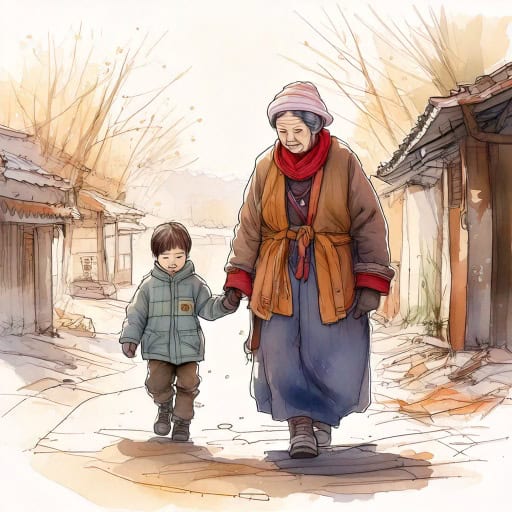
    外婆离开我们到别的地方生活已经有将近四个年头了,现如今家里人日子越来越好,只是临近清明节,身处大洋彼岸不免再一次挂记起外婆来,不知道她在另一个世界生活有否艰辛。感怀之余翻出一篇旧文,以此纪念和问候我可爱的外婆。

    外婆走的时候,我却没能到身边送她最后一程……

    外婆是个老实巴交的人,年轻的时候便是如此。那时候生活很艰辛,外婆和太姥姥一起抚养着妈妈。外公很早的时候就撇下外婆去了南方,家里便只剩下了几个女的,生活的艰辛可想而知。听妈妈说过,她小的时候很贪玩,经常出去玩不回家来。太阳下山以后,外婆就跑出去到处找她,虽然很着急,但是也从来没有骂过一句。妈妈说,外婆是这个世界上她见到的最善良的人了,如果谁还能跟她闹出什么矛盾,那么那个人肯定有问题。我对这句话印象很深。听妈妈说,外婆小的时候,就住在妈妈后来住的地方,那里曾经有过日本人驻扎。外婆总是很严肃的对我说,其实日本人没有你们课本里说得那么可怕。外婆还是个孩子的时候,有一次半上午她在炕头上打瞌睡,一个日本人走了进来,在外婆鞋上敲了敲,说道“醒醒,家里没人,看好东西。”大致是这样的,我也记不清了。外婆也给我讲过几次,每次都又认真又诙谐,我每次都能听笑出声来,觉得像传奇故事一般。

    从我有记忆起,外婆就已经老了。脸上的皱纹堆着。皱纹下面饱经沧桑的脸上,却时常露着很天真的笑容。我们家乡那里日头很烈,外婆黑黝黝的脸庞透着的红色,让人感觉她是个健康敦实的老太太。外婆身体很好,记得在我还没上学的时候,外婆担心我自己玩不安全,就带着我到街上捡冰棒棍儿。当时10个冰棒棍儿可以换一个冰棒,我和外婆很卖力的捡,顶着夏天的大太阳在背后,却浑然没有一点疲惫的感觉。每次手里抓着换来的冰棒,我的心里就美滋滋的,当时的满足是难以用现在的任何情形来比拟的。每次到傍晚,外婆就领着我,迎着晚霞回家。那时候外婆住在老城的一座很旧很旧的泥土房子里。房子周围是一个很大很大的院子,围着院子住着许多户人家。外婆家在大门的右手边,是向阳的房子,算是条件稍好的。回到家里就是太姥姥照顾我,太姥姥很慈祥,很精干,她独自一人承担着一家子的生计。我在外婆家一直住到二年级毕业。后来太姥姥身体状况开始下降,就和外婆一起搬到了爸爸妈妈住的地方,我也自然跟了过来。太姥姥在我还不太懂什么叫“离世”的时候离开了我们,只留给我断断续续的片段记忆。

    随着无情岁月的慢慢流逝,外婆也日渐老了。不知从什么时候开始,外婆走路时不时需要拄着拐棍。那时候我刚刚有了妹妹,妈妈,外婆还有我便承担起轮流照顾妹妹的任务。后来妹妹长大了,也开始调皮了,经常胡闹,我也一样。每到这时候,外婆总是不厌其烦的说教我们。我和妹妹有时候听的很烦,便会对外婆“恶语相向”,还“动手动脚”。外婆便很无奈的叹气“这两个调皮鬼……”。但是每次我们但凡有任何事,外婆总是会在第一时间赶过来。我心里知道其实外婆很疼我和妹妹,她是那种没有心机的人。把自己对别人的好都倾注在那点点滴滴里,真正的苦楚,却总是一个人默默承担着。后来慢慢的,我也会帮着外婆教育妹妹了,我开始体会到了外婆对我们的好,我总想着回报她什么,但我至今都什么都没有做到……

    外婆特别喜欢抽烟,从年轻的时候就如此,以至于后来引发了气管炎,经常咳嗽,有时候还会上气不接下气。妈妈和我看了都又着急又生气,买了很多药,看了很多医生以后,外婆的病情开始缓解了一些。妈妈很想让她戒烟,但是外婆总是不听劝告,甚至躲起来抽烟。妈妈发现后很生气,便不再给外婆零花钱,让她乖乖的呆在屋子里养病。外婆那时候腿脚还很灵便,就自己出去拣破烂卖钱,然后买烟抽。每次她疲惫不堪的回到家,妈妈总是又气又笑,拿她没有一点办法,就这样过了好一段时间。外婆总跟妈妈说,她一生没有什么其他的兴趣爱好,就只有抽烟和捡破烂,为什么不让她做。妈妈当时觉得外婆很不可理喻,连别人顾及她的健康都不领情,便依然拒绝给外婆买烟的零花钱。后来外婆腿脚不便了,出入都要拄着拐杖。有一次妹妹告诉我,她看到外婆蹑手蹑脚地提着拐杖向大门走去,一出大门便走得又快又轻盈。回头我告诉妈妈的时候,我们都笑了。妈妈终于在这件事情上妥协了,但是依然限制着外婆抽烟。那时候,在谁看来,这都是正确的。

    我上大学以后,外婆的身体每况愈下,出门甚至走路对她来说都已经成了奢侈的行为。妈妈承担起了照顾她的重任,从吃饭到睡觉到上厕所。几年间,外婆的身体状况起伏了好多次,妈妈也多了几分老意,发迹的白头发再也掩盖不住了。每次放假回到家,妈妈总是把我领到外婆的小屋里,指着我让外婆认人。那时候外婆已经患了老年痴呆症,记性时好时坏。清醒的时候,她会叫出我的名字,妈妈就呵呵的笑着,笑声里透漏着的是天底下最淳朴的母女情。有时候外婆会说胡话,妈妈就不厌其烦的跟她说着过去的事情,帮她回忆。其实我每次看到外婆的时候,心里都很酸楚,知道自己没能尽孝心或者帮忙分担。外婆勤勤苦苦一辈子,年轻的时候吃了不少苦,很早就开始独自拉扯着妈妈一起生活了,老了以后也无亲无故,只有妈妈一个女儿。妈妈后来总会跟我说,外婆老了以后能跟在我们家一起生活,也算是她老人家一辈子善良积下的德了。

    五月的一天,外婆抛下我们仅有的几个亲人,走了,走的悄无声息,走的那天家里那边下了雨夹雪。妈妈当时没有告诉我,她怕我知道了会影响我的工作和学习。我理解妈妈,但是我还是很想能够回去送她老人家一程,毕竟外婆曾经抚养我长大,教会我自力更生,也教会了我很多做人的道理。没能在最后一刻尽到孝道,我一直感受着深深的负罪感。妈妈在我临近毕业的那年来北京看我的时候才把外婆的事告诉了我,我哭了,但流下的不是伤心的眼泪。我知道外婆的下半辈子有妈妈的照顾应该算是很幸福了,妈妈对外婆无微不至的孝顺,也算是外婆清苦半辈子的回报吧。当时妈妈给我讲安排外婆后事的事,故意用了很轻松的语气。我知道妈妈不想让我伤心,但我还是留下了眼泪,我悄悄地背过去,没有让妈妈看到。想起外婆黑黝黝的笑脸,想起外婆领着我上街捡冰棒棍儿,想起外婆拄着拐杖顶着大太阳上街捡破烂,想起外婆很有成就感的拿着捡破烂换来的钱去买烟抽,想起外婆患老年痴呆症以后还能唤起我的名字……

    从外婆那时候开始,我家便没有什么亲人,一直是几个人相依为命。从小到大,妈妈一直在告诉着我说,我们家没有什么亲戚,所以你要珍惜身边仅有的亲人,长大以后一定要对他们好。这个我记得很清楚,现在也一样。外婆永远离开我们的那天,妈妈告诉我她没有难过。外婆一生中吃了不少苦,到了晚年最无助的时候能有我们在身边,她其实挺幸福的,我点着头。妈妈还说,其实人喜欢什么就应该做什么,老是限制着也没什么意义。外婆一生中没什么爱好,从很早开始便是孤独一人。一生中的爱好也只有抽烟和捡破烂,为什么不让她做她喜欢做的事呢。其实人活一辈子,做点自己喜欢的事就很幸福了。妈妈说她很后悔曾经为了这些事情“骂”外婆,不给她钱买烟。后来外婆自己捡破烂卖钱妈妈也“骂”她,虽然当时都是为她好,怕她出去不安全,对身体不好。但是现在想来,妈妈还是很后悔,到去世都限制着外婆做自己喜欢的事情。妈妈告诉我,给外婆烧纸的时候,烧了很多卷烟和金银。她跟外婆说,到了那边又是孤身一人,要好好照顾自己,想买什么就买什么,想要什么就告诉我们。妈妈还给安葬在外婆旁边的人烧了纸钱,希望他们在那边多照顾老实巴交的外婆,不要欺负她。

    外婆是个老实的好人,希望在另一个世界也能碰上好人,能够对她好,能够爱护她,不欺负她……

  • Experience the old American West

    November 2011 @ Lone Pine, California

    Lone Pine served as our stopover during the Death Valley trip, a quiet town nestled in the flat expanse of Owens Valley along the Sierra Nevada. As its name suggests, Lone Pine feels solitary and remote, perched at over 1,000 meters above sea level. Despite being a valley, its mountain surroundings give it a dry, desert climate—scorching in summer, cold in winter. Because of its proximity to both the Inyo National Forest and Death Valley National Park, this tiny town of just 2,000 residents has become a favored resting point for travelers and climbers alike.

    We took this opportunity to experience Lone Pine’s well-preserved Old West charm. Time seemed to bend here—modern realities wrapped in vintage aesthetics. One contrast, however, stood out starkly: prices. Owing to the thriving tourism, souvenirs, food, and lodging were surprisingly expensive. But perhaps that, too, was part of the experience.

    After a long, cold day exploring the Alabama Hills, we returned to town with tired bodies and empty stomachs. A small, western-style restaurant drew us in. We rushed inside like famished wolves, only to be enveloped by a cozy calm that invited lingering. The warmth of the space let us settle in, and I began to take in my surroundings. Old checks signed with elegant penmanship—likely written by celebrities—were framed and proudly displayed.

    The side walls were a tribute to classic Westerns, plastered with stills from cowboy films. Wooden ceilings, modern lights, and a bar that looked like a different world altogether completed the setting. Photo frames lined every bit of the wall, turning the restaurant into a kind of living art gallery. Prominently featured near the entrance was Clint Eastwood, rugged in his cowboy attire—a nod to his early Western film days that propelled him to cinematic greatness. His portrait stirred something emotional in me; I almost wanted to take it home.

    The food matched the ambiance—hearty portions and rustic flavors. Though not cheap, it was worth every penny. With a bottle of beer in hand, we basked in the warmth of the place, trading stories and savoring the quiet after a long day.

    Even the restroom, surrounded by photo frames, became a place of visual distraction. By the window, a cow skull totem reminded us of the Old West spirit. Outside, the town had quieted, blanketed in stillness.

    The next morning, our little hotel glowed with soft yellow light before the sun had even crested the horizon. The mountains—Whitney among them—were already bathed in sunlight, their snowy caps glowing. In that frigid dawn, the cold faded into beauty. Rabbits hopped cautiously through the grass, while a neighboring ranch’s calves eyed us with both curiosity and disdain. The town slowly woke under the first golden light of day, and our hotel—simple, quiet, certified by California’s AAA—felt perfectly placed.

    The silence of the empty parking lot, the early light over Mount Whitney, the layered colors of autumn grasslands—everything fell into place. As we prepared for the second day of our journey, I took one last photo. The composition, the mood, the stillness—I knew then that we would come back.

  • Nature’s color artist and air quality expert: Lichen

    Fossil Falls & Whitney Portal in California: Living Artworks Etched in Stone

    This article isn’t about human-made masterpieces—it’s about something far more profound. In this story, the artwork is alive, and the artist is nature itself. These are not traditional creations, but living artworks: lichens.

    Often overlooked, lichens (or “Lyken” as I affectionately call them here) are symbiotic unions of fungi and algae. They live quietly at the edges of human attention, yet their resilience, subtle beauty, and ecological significance are extraordinary. Though small and unassuming, they quietly paint forgotten corners of the Earth with texture and color, breathing life into stone and purifying the air we depend on.

    In botany, lichens barely earn a footnote, eclipsed by trees, flowers, and lush grasses. Literature rarely sings their praises—one of the few being Ye Shaoweng, who wrote: “I should pity the moss imprinted by the teeth of my clogs.” His reluctance to step on the lichen-covered courtyard is perhaps one of the earliest recorded tributes to their silent presence.

    Lichens have often been used metaphorically to describe introspective minds—those who retreat into quiet corners, blooming in shadow. And that is the truth of their nature: they avoid the sun, thrive in shade, and reveal their delicate beauty only to those who take the time to look closely.

    I hope this post brings them closer to you, deepening your appreciation for these quiet inhabitants of stone and time.

    This encounter with lichens came unexpectedly during our Death Valley trip, particularly at Fossil Falls and the base of Mount Whitney. (For more on this journey, see: “[California] Death Canyon Survival Guide Part 1 – Strategy and Preview” and “[California Fossil Falls] A Wonderful Date Between Volcanic Magma and Glacial Meltwater.”)

    Some lichens can even survive in the harshest climates on Earth—scorching deserts, icy polar regions, barren alpine slopes, and even in toxic waste. Because they lack roots, they absorb all their nutrients directly from the air. This makes them highly sensitive to air quality, which is why their presence—or absence—is a biological indicator of environmental health. Where they flourish, the air is pure.

    In Fossil Falls, blue-gray volcanic basalt serves as canvas. On its shaded sides, lichens weave vivid tapestries in white, orange, yellow, and green.

    White dominates, but it’s the mix that turns stone into story. Without them, these heavy rocks would be dull and lifeless. With them, they glow.

    A few examples:
    – White lichen leaves bloom like tiny flowers across the basalt.
    – Yellow and orange gather in warm harmony, as if painted by a natural brush.
    – Even green lichen emerges here and there, standing out against the whites.
    – A rare black lichen curls into the shape of a lowercase alpha, like a final signature on nature’s script.

    Lichens not only dazzle the eye but serve as ecological powerhouses. Despite their size, they fix soil, retain moisture, reduce carbon dioxide into glucose, absorb minerals from rain and dust, and even fix atmospheric nitrogen. They’re humble yet essential.

    Some look like rust, others like blooming flowers. There’s a gentle cartoonish quality to some, forming shapes that resemble characters like Mickey Mouse. Others exude intensity—an orange patch shaped like a scorpion, for instance.

    In cooler, damper conditions near Mount Whitney, lichen colonies show different personalities—richer, more vibrant, even more textured. There are wild splashes of color and formations that evoke brushstrokes of calligraphy or furry thatched cottages. One patch, I swear, looks like a storybook roof under a cozy orange glow.

    And among the most moving sights: newborn lichens growing atop the weathered layers of their ancestors—life continuing, unbroken, resilient. Generation after generation, they endure.

    Lichens are not just organisms. They are whispers of time, quiet revolutions in color and form, artists of survival. Once you notice them, you’ll never see stone the same way again.

  • A date between volcanic magma and glacial meltwater

    November 2011 @ Fossil Falls, California

    This blog post is part of our Thanksgiving journey to Death Valley. For a detailed itinerary and travel tips, check out “[California] Death Canyon Survival Guide Part 1 – Tips and Preview.”

    One of the joys of travel is the thrill of discovering unexpected places. Fossil Falls was one such surprise. Tucked away from major attractions and often overlooked, these quieter destinations hold a unique kind of magic—and thanks to fewer visitors, they often remain beautifully preserved. Fossil Falls sits off California Highway 395, near the southern rim of the Sierra Nevada Mountains.

    Don’t be misled by the name: there are no fossils or waterfalls here in the conventional sense. What greets you instead is a stunning landscape of volcanic basalt sculpted by ancient glacial meltwater into surreal formations—nature’s own stonework fossilized in time. Tens of thousands of years ago, this was a fertile basin alive with rivers, lakes, and early human settlements. With ample water, food, and a mild climate, the area was a kind of paradise. Today, all that’s left is an arid desert—its past beauty buried beneath time and stone.

    If you’re traveling through the Nevada Mountains or making your way north to Death Valley, this detour is highly recommended. It’s a place that speaks to both geological wonder and forgotten history.

    At the trailhead, there’s a small rest area where brown-black basalt boulders immediately set the tone. Since the rivers dried up over 10,000 years ago, life here has disappeared—leaving only gravel plains and scattered tufts of dry grass. The dominant palette is black and yellow, punctuated by distant views of Red Hill (also known as Red Cinder Hill), a reddish cone of volcanic ash that gives the land its vivid hue.

    Massive rock clusters lie stacked like petrified lava flows, frozen mid-motion. One fan-shaped boulder still bears traces of an earlier time, while rust-like textures mark the surface of the basalt.

    Walk about 100 meters down the marked trail, and suddenly the landscape opens up—revealing what the name “Fossil Falls” truly refers to. During an intense period of volcanic activity, lava once surged into Owens Valley. Glacial ice from nearby peaks rapidly melted upon contact, sending meltwater cascading over still-hot rock. That fast-cooling lava formed the first version of Fossil Falls.

    Over thousands of years, the meltwater continued to eat away at the basalt, carving it into smooth, cylindrical hollows. It’s the perfect example of how “dripping water wears through stone”—transformed into geological poetry.

    Fossil Falls is both a time capsule and an artwork. It tells stories of a prehistoric world while offering dramatic beauty in the present. You may notice colorful patches on some of the backlit rocks—not paint, nor mineral specks. What are they? That mystery will be explored in a future post.

    Standing in the golden light of sunset, these ancient lava flows seem to surge all over again—this time in silence. Our shadows, cast across the basalt, feel small by comparison.

    This entire canyon is hidden in plain sight, tucked inside a desolate field. Only the curious and the bold will ever glimpse its quiet majesty.

    In some places, you’ll find perfect circular bowls carved into the rock. During the rainy season, they hold water tinted green and yellow—resting in striking contrast against the reddish-brown basalt. A moment of stillness in a place sculpted by motion.

  • New Year’s Eve Street Party

    Downtown Long Beach, California

    The annual New Year’s Eve Street Party, hosted by the City of Long Beach and supported by a lineup of energetic bands, kicked off at 7 p.m. on the final day of 2011. Simultaneously, free activities and fireworks lit up Rainbow Pier (see blog post: “The Last Touch of Color at Rainbow Pier in 2011”). Though the weather took a turn—heavy fog rolled in just five minutes before the fireworks—the crowd remained spirited. Across the street, the street party continued in full swing until the midnight countdown welcomed the New Year.

    The night air in downtown Long Beach wasn’t freezing, but it was certainly chilly. Portable heaters were placed along the two streets, which were cordoned off with iron fences to create the event space. Due to the number of performing bands, tickets were required—available in advance or at the gate. A long line formed early, and we waited in the cold wind for over half an hour, enduring a slow but thorough security check. At last, we made it to a heater, warmed our hands, and got ready to join the celebration.

    The buildings lining the street were adorned with festive lights, and Christmas decorations still lingered, glowing alongside a fresh wash of neon. The holiday spirit hadn’t faded—in fact, with the New Year arriving, the crowd seemed even more alive, spilling into the streets to revel in the moment.

    In the middle of the road, a towering lighting rig cast colorful, strobe-like beams across the scene. The everyday street transformed into a disco-lit carnival. Bands took turns blasting out popular rock anthems under shifting, hypnotic lights. The sound and energy were electric.

    One keyboard player stood out—playing and singing effortlessly with serious skill. At first, most people simply watched, but soon enough, they began to dance. The square quickly filled. I’ll never forget the woman dressed like Michael Jackson—her outfit was bold, and her dancing stole the spotlight.

    Some folks in the crowd looked straight out of a music video—definitely camera-worthy. As a local, I came prepared with my camera and tripod, content to watch and capture the chaos.

    Between the booming music and dazzling lights, it wasn’t exactly my ideal scene, but the vibe was infectious. Street lamps still bore their Christmas décor, a sign of how the two weeks surrounding Christmas and New Year’s are treated like one long, relaxed holiday. Stores often shut down. Students are off. Teachers are on vacation. Life slows to a crawl. For newcomers from overseas, this shift can feel disorienting.

    “Ghosts and monsters” appeared in long exposure shots—blurs of movement in the light.

    Interestingly, despite the crowd, local bars and small restaurants were unusually quiet. Makeshift bar stalls and portable ATMs popped up along the street instead. On one side, soft drinks; on the other, hard liquor. Coexisting peacefully under a windblown sign that read “2012.”

    Colorful lights draped the entire block, and people buzzed with energy and joy. As for the background noise in the video clips—well, consider it part of the charm.

  • The small-town atmosphere on Christmas Eve

    December 2011 @ Downtown Santa Barbara

    In previous years, I traveled over Christmas, but this year I chose to stay home and rest. On Christmas Eve, I ventured into downtown Santa Barbara to soak in the holiday spirit. True to its small-town charm, the city center was unusually quiet. Aside from a few bars with scattered patrons, it seemed most people had chosen to stay inside, warming themselves by the fire. The silence, though peaceful, also echoed a sense of unfamiliarity.

    As a foreigner in this land, it’s not easy to adjust to a new culture overnight. Still, I strapped on my camera, carried my tripod, and joined a handful of other out-of-towners walking the empty streets, capturing a very different kind of Christmas.

    Red gift boxes hung above shuttered shops. A bicycle rental store prepared to close. The streets were eerily still, broken only by the flicker of string lights wrapped around tree trunks and the occasional passing car paused by a traffic light. The mall downtown, once a bustling holiday destination, stood empty, its Christmas trees—tall and small—scattered across the center promenade in quiet dignity.

    Even the street lamps wore festive scarves of light. In one spot, a “family” of Christmas trees stood together—a tall one, a medium one, and a little one—like a quiet tableau of seasonal warmth. Shop windows glowed with their own solitary trees, while a towering giant tree, wrapped simply in white light, stood as a reminder of the effort someone once gave to make the city shine.

    Groups of two or three strolled in hushed conversation, but mostly, it was stillness that filled the night. A peaceful, if a bit lonely, kind of Christmas.

  • The last touch of color at Rainbow Pier in 2011

    December 2011 @ Rainbow Harbor, Long Beach, California

    2011 was an extraordinary year. As the New Year approached, I found myself uncertain—unsure what to do or where to go. The idea of celebrating didn’t initially appeal to me. But at the last moment, I made up my mind to step out for a walk. A quick online search revealed that Downtown Long Beach was hosting a large fireworks display and street party to ring in the New Year. That sealed my decision.

    Long Beach, situated along the southern Pacific coast of Los Angeles, is known for its sprawling beaches and vibrant port—one of the top ten busiest in the world. It’s also a major terminal for long-distance cruise ships, drawing in countless tourists year-round. Among its gems, Rainbow Harbor stands out as one of the most picturesque spots.

    Just before the sun dipped below the horizon, the harbor shimmered with reflected light—fiery reds and golds rippling across the water and mingling with the silhouettes of docked ships. It was a fleeting, harmonious moment.

    As dusk settled in, the harbor took on a rare stillness. The final sunset of 2011 painted the sky in soft hues, mirrored on the water’s surface. Gradually, the nearby restaurants and entertainment venues came to life, bustling with energy and anticipation. Dolphins, ever the symbol of the harbor, marked its welcome presence.

    The sun finally disappeared, casting the lighthouse and distant palm trees in the gentle afterglow of twilight. Night swept over the harbor, bringing with it a different charm. The lighthouse began to cycle through a palette of colors, and the Ferris wheel became a glowing, spinning top under the lens of a long-exposure shot.

    But just as the clock approached 9 PM—and with it, the eagerly awaited fireworks—the night took an unexpected turn. A heavy fog rolled in, possibly the thickest of the year, blanketing the harbor just ten minutes before the show. The sky swallowed the display before it began. Crowds pressed behind guardrails let out sighs and groans of disappointment, left only with the kaleidoscope of mist and ambient light.

    And yet, within moments, the mood shifted. People laughed, turned toward each other, and embraced the New Year with warmth and cheer. That swift recovery reminded me of something important: the optimism and resilience of the American spirit—something truly worth learning from.

  • Christmas Eve Pier Light Parade

    December 2011 @ Stearns Wharf, Santa Barbara

    On the evening of December 11, the 26th annual Parade of Lights lit up Stearns Wharf in Santa Barbara. This year’s theme—Candy Cane Holiday—invited participants to transform their boats into floating spectacles of holiday cheer. All vessels had to register in advance and were guided through a designated route after sundown, showcasing their light displays to the crowd lining the dock.

    Around 30 boats of various sizes participated, each uniquely decorated to fit the theme. By 4:40 PM, the winter sun had already dipped below the horizon, and by 5:30, the parade had begun. Over the course of an hour, boats drifted past one by one—some playing carols, others hosting dance routines. Cheers rang from the shore as spectators soaked in the vibrant, festive spirit.

    As dusk deepened, the lights along Stearns Wharf cast a warm glow. The souvenir shops, usually quiet this time of year, took on a whimsical charm under soft illumination. Some boats cruised gently past early, their silhouettes backed by the glowing town behind them.

    This time, I experimented with long-exposure photography to capture the flow of motion. The trails of light left behind by passing boats created dreamy, abstract arcs—transient brushstrokes on the dark canvas of the sea.

    Santa Claus made his entrance aboard a cheerfully lit boat, waving with his assistants and wishing everyone a Merry Christmas. Candy canes wrapped around the railings echoed the night’s theme perfectly. Another boat staged a glow-stick performance, and with the camera set for long exposure, the streaks of movement painted the scene with surreal energy.

    Even the simplest boats—some with just string lights or a Christmas tree—earned enthusiastic waves and applause. “Merry Christmas!” rang out from both boat and shore. A reindeer figurehead stood tall at one bow; another ship outlined its sails with constellations of lights.

    As the parade continued, the ships grew larger and more elaborate. One featured seahorses “pulling” the vessel, with a bearded man gripping reins. Others showcased cartoon themes, candy-striped cottages, tropical mermaids, and twinkling masts that stretched into the sky.

    The final boat stole the show—a dazzlingly decorated yacht where stars dangled above, the moon wore a Santa hat, dolphins and seahorses danced across the hull, and a surfer clad in blinking lights mimed riding waves from the middle deck.

    Then, just as applause echoed across the wharf, the fireworks began. A finale of color burst into the night sky—like sparks leaping from festive wheat stalks—leaving the crowd mesmerized and reluctant to leave. Even on the walk back, heads turned skyward, savoring the last moments of a magical evening.